

Egypt will roll out a new social support package this week to assist vulnerable and low-income groups ahead of the high-demand Ramadan season, the Egyptian Presidency announced on Saturday.
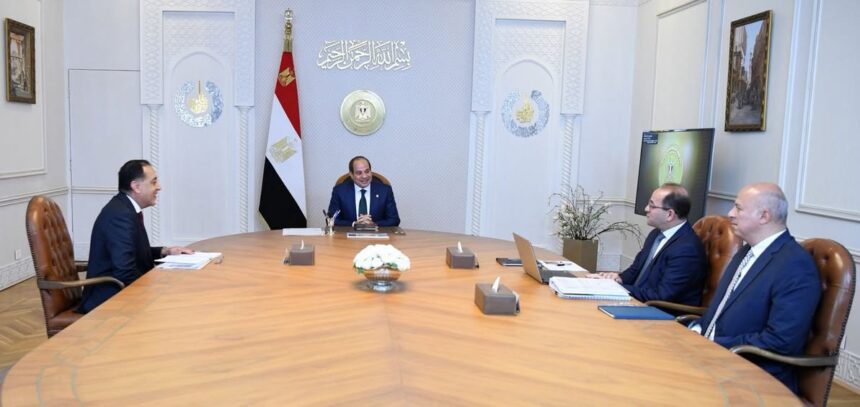
During a meeting with Prime Minister Mostafa Madbouly and Finance Minister Ahmed Kouchouk, President Abdel Fattah Al-Sisi directed the government to begin implementing the proposed measures, primarily in the form of direct cash support.
The president also instructed that February salaries for state employees be disbursed during the current week to ease financial pressures before the start of the holy month, which typically sees a surge in spending on food and essential commodities.
The move comes as poultry prices climbed to EGP 97.2 per kilogramme this month – their highest level in 10 months – according to data from the Information and Decision Support Center (IDSC).
In response to rising prices, the government had earlier announced plans to import frozen chicken and sell it at discounted rates. The first shipments are expected to arrive before Ramadan. Supplies, including whole birds as well as thighs and breasts, will be distributed through a nationwide network of fixed and mobile outlets affiliated with the Ministries of Supply and Agriculture, as well as the Mostaqbal Misr Agency, covering all governorates.
The recent surge in poultry prices contrasts with a marked decline in other essential commodities during the final quarter of 2025, when some products recorded price drops of up to 80%. The decline was attributed to stabilised input costs, improved supply flows, and softer demand.
Official data show that Egypt’s annual urban inflation rate remained unchanged at 12.3% in December, holding steady from November, supported by relative stability in food and beverage prices. On a monthly basis, inflation slowed to 0.2% in December, compared with 0.3% the previous month.
According to the Presidency, the new social package is designed to shield lower-income households from seasonal price pressures during Ramadan.
The meeting also addressed additional funding to complete the first phase of the “Decent Life” rural development initiative, expand job creation programmes targeting vulnerable groups, and enhance healthcare services, including treatment for critical cases, reducing surgical waiting lists, and accelerating the rollout of universal health insurance.
Discussions further covered proposed income increases for state employees, tax facilitation and reform measures for the 2026-2027 fiscal year, and customs adjustments aimed at supporting domestic industry, encouraging investment and curbing smuggling.
Finance Minister Kouchouk also briefed the president on ongoing negotiations with the International Monetary Fund, efforts to reduce public debt relative to GDP, and measures to bolster investor confidence and strengthen Egypt’s economic competitiveness.

