

For decades, the Arab Israeli conflict has been framed in absolute emotional terms: love or hate, victory or defeat, resistance or betrayal. This language, while capable of mobilising sentiment, has repeatedly failed to deliver peace, justice, or stability. What confronts the region today is not a romantic struggle, but a hard and unavoidable reality: Israel exists, Egypt exists, and the region will not move forward unless it engages with what is, rather than what it wishes were.
This is neither a call for surrender nor an endorsement of power politics, and it is certainly not a defence of Israel’s policies. It is an acknowledgement of the limits of the conflict itself. Israel cannot eliminate the Arabs, nor can the Arabs destroy Israel. This was never a realistic outcome, and it is even less so in today’s regional and international context. Persisting in denial does not preserve principles; it merely prolongs instability.
The Palestinian issue remains central to this reality, but addressing it honestly requires reframing it. At its core, it is the concern of its direct parties, Palestinians and Israelis, and of neighbouring states with immediate geographic and security stakes. Beyond this circle, the issue has often been reduced to populist rhetoric for domestic consumption, with limited influence on its actual trajectory. Egypt, in particular, has paid a heavy political, military, and economic price over decades, and cannot reasonably be expected to shoulder an open-ended psychological and strategic burden on behalf of others.

Grounding the Palestinian cause in realism does not mean abandoning it. Any viable form of Palestinian statehood will require substantial and painful Israeli concessions that confront decades of rigid and exclusionary policies. Palestinians cannot be reduced to a humanitarian case in need of aid alone. Political rights cannot be substituted with assistance, nor can history be erased by adjusting language or reframing suffering in purely humanitarian terms.
If Israel seeks to become a normal state within the region, it must act like one. It cannot indefinitely claim historical justice for Holocaust victims, a claim that is both legitimate and necessary, while simultaneously denying or diluting the historical and political rights of Palestinians. Regional acceptance is not secured by force alone, but by a minimum threshold of justice that reduces, even if it does not entirely eliminate, the prevailing sense of grievance.
For Egypt, the primary challenge today is neither military nor diplomatic, but psychological. The peace treaty succeeded in ending the war, yet it never evolved into a fully internalised popular peace. This unresolved psychological gap has sustained suspicion and symbolic hostility for decades. Addressing this dimension is no longer optional; it is essential for any sustainable regional order.
The task, however, is not to love Israel or to excuse its actions. It is to redefine peace as the realistic management of coexistence, rather than as an emotional or moral relationship. Politics is not governed by love and hate, but by interests, balance, and damage control. Ideological hostility has proven costly. Strategic clarity, by contrast, may be less expensive and more effective.
Egypt and Israel do not share culture, identity, or historical narrative, but they do share geography and fate. The Eastern Mediterranean cannot sustain permanent volatility. Development, energy security, and regional stability are not ideological slogans; they are conditions of survival. Endless conflict may serve narratives and political posturing, but it serves no society.
If confrontation is inevitable, delaying it for as long as possible is a rational strategy. If the inevitability of confrontation is itself a political illusion sustained by rhetoric, then coexistence becomes a necessity rather than a concession. In both cases, denial remains the worst option.
Politics is not a moral tribunal; it is the art of managing reality as it exists. Recognising reality is not the end of the road. It is where the road begins.
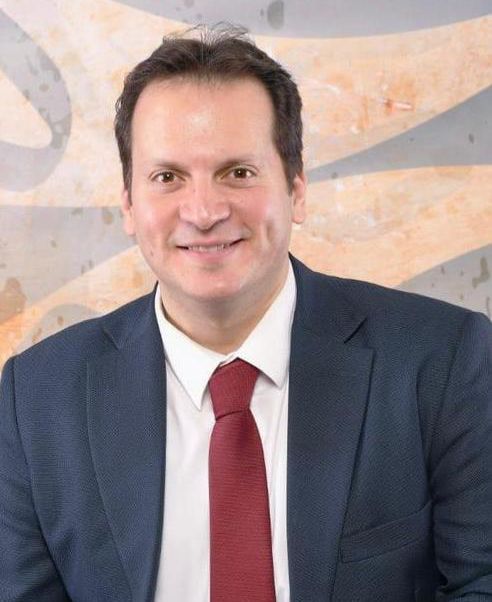
Dr Ramy Galal is an Egyptian writer and academic specialising in public management and cultural policies. He has authored studies on cultural diplomacy, the orange economy, and restructuring Egypt’s cultural institutions.
Galal holds a PHD degree from Alexandria University, a master’s degree from the University of London, and a Diploma from the University of Chile.
A former senator, and former adviser and spokesperson for Egypt’s Ministry of Planning. He was also the spokesperson for the Egyptian Opposition Coalition.

