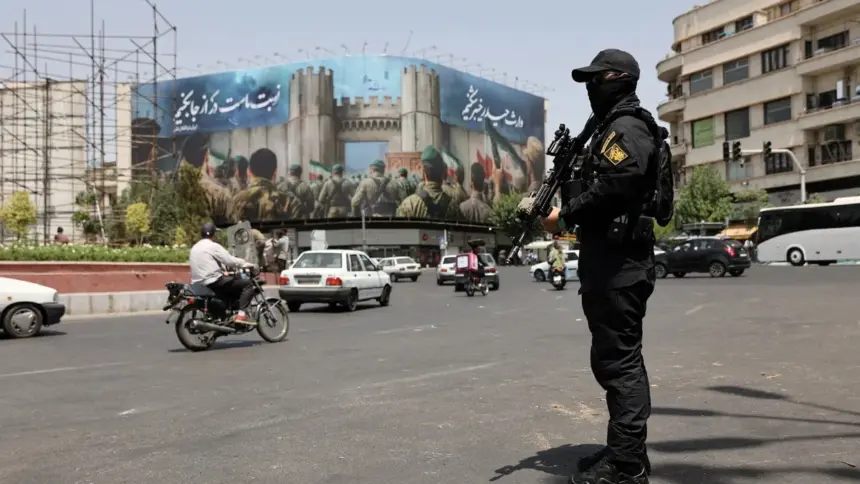
When security forces arrived at the home of Azar Mansouri on Sunday, the arrest of the president of Iran’s “Reform Front” marked more than just a crackdown on a lone political figure. It signalled a regime-wide effort to cauterise domestic dissent before entering what may be its most perilous diplomatic confrontation with the United States in decades. Alongside Mansouri, veteran figures Mohsen Aminzadeh, a former deputy foreign minister, and the experienced politician Ebrahim Asghar-Zadeh were also detained. While a fourth detainee remains unidentified, state media has confirmed that other high-ranking figures have been summoned by the judiciary on charges involving the targeting of national unity, coordination with enemy propaganda, and the creation of clandestine mechanisms to overthrow the government.
The Domestic Crackdown: Silencing the ‘Internal Front’
This wave of arrests follows the bloodiest period of domestic unrest in the Islamic Republic’s modern history. The scale of the violence remains a point of intense contention; while the Human Rights Activists News Agency (HRANA) estimates that recent street protests resulted in a staggering 6,842 deaths, the Iranian government maintains a significantly lower figure of 3,117, which includes members of the security forces. Conversely, exile opposition groups claim the true toll reaches into the tens of thousands. This atmosphere of internal friction was laid bare on Sunday when ultra-hardline MP Amir-Hossein Sabeti challenged the prominent reformist Ali Shakouri-Rad to provide evidence for leaked claims that security forces orchestrated acts of sabotage to justify the lethal crackdown.
The detentions also appear to be a response to a growing sense of betrayal within the reformist camp itself. Mansouri’s recent social media activity reflected a profound disillusionment with the political structure, as she expressed regret for supporting President Masoud Pezeshkian’s campaign and publicly called for his resignation. By removing these voices, Tehran seeks to present a monolithic facade as it squares off against a resurgent Trump administration that has made its expectations for a new deal explicit.
Naval Diplomacy and the Muscat Negotiations
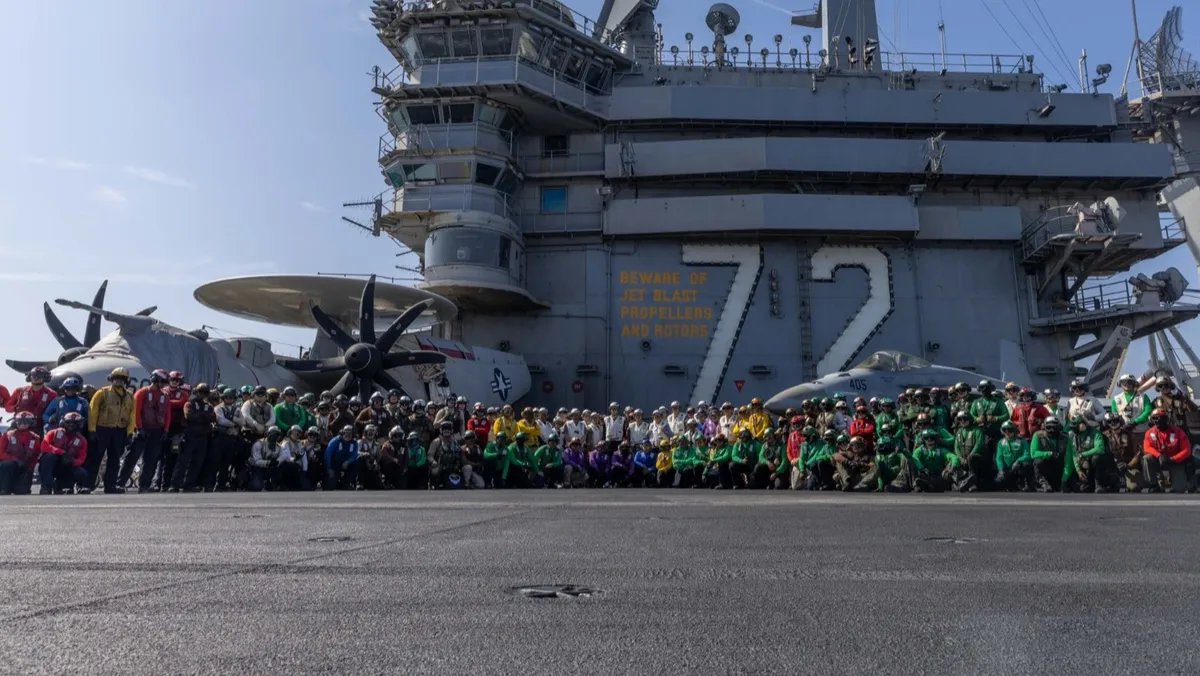
While the arrests unfolded in Tehran, the geopolitical stakes were being raised in the waters of the Arabian Sea. On Saturday, U.S. envoys Steve Witkoff and Jared Kushner, accompanied by Admiral Brad Cooper of U.S. Central Command (CENTCOM), conducted a high-profile visit to the aircraft carrier USS Abraham Lincoln. Regional sources indicate that both Tehran and Muscat were notified of the visit in advance—a move designed to ensure the message of “Peace through Strength” was received without triggering an accidental military escalation. On the social media platform X, Witkoff noted the team met with a pilot who had recently intercepted an Iranian drone, stating the naval presence serves to deter adversaries and demonstrate American readiness.
This military posturing serves as the backdrop to the first round of negotiations held in Muscat, Oman, last Friday. President Donald Trump described the initial talks as “very good” but coupled the optimism with a stark warning that the consequences for Iran would be “very dire” if a comprehensive deal is not reached. The White House is reportedly demanding a permanent end to all uranium enrichment, strict limits on ballistic missile development, and a total cessation of support for regional proxies. However, Tehran remains defiant, with Foreign Minister Abbas Araghchi stating that resilience is the greatest challenge and that any retreat from the right to local enrichment could lead to an unpredictable and dangerous collapse of national sovereignty.
A Future Forged in Defiance
The gulf between the two nations has left Israel increasingly uneasy, with Prime Minister Benjamin Netanyahu’s government reportedly dissatisfied with the trajectory of the U.S.-led talks. Concerns persist in Tel Aviv that the U.S. might accept a deal that fails to address the threat of Iranian ballistic missiles or its regional “axis.” In a move reflecting this urgency, Netanyahu has moved his scheduled meeting with President Trump in Washington forward to Tuesday. As the U.S. military presence in the Gulf intensifies and the judiciary in Tehran prepares its cases against the reformist elite, the Islamic Republic finds itself caught between an external vice and internal fracturing, where any sign of weakness—whether in a Muscat hotel or on the streets of Tehran—could prove terminal.