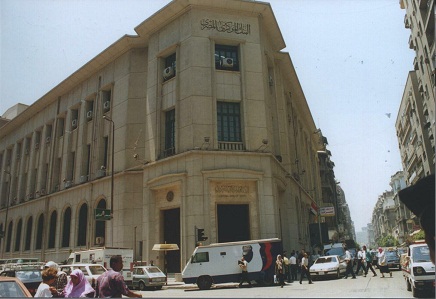
Protecting the Suez Canal as a sovereign asset and the Central Bank of Egypt (CBE) as the guardian of monetary policy requires both to remain on strictly independent tracks. At first glance, the idea of transferring the Suez Canal’s assets or revenue flows to the Central Bank appears to be a clever manoeuvre of financial engineering. However, at its core, this proposal raises fundamental questions that go to the heart of economic national security and the very independence of the Central Bank. The concept centres on the government transferring ownership of the Canal’s assets or flows to the CBE in exchange for writing off the state’s massive indebtedness to the institution. Below is an in-depth analysis of this proposal, weighing the structural risks against the procedural claims.
The Case for Rejection: A Structural Perspective
The primary function of a Central Bank is oversight and the management of monetary policy, not the direct management of commercial or industrial assets. Ownership of productive assets like the Canal would create a glaring conflict of interest and weaken the bank’s international credibility as an independent regulator. This is particularly sensitive at a time when the CBE is actively seeking to dispose of its historic stakes in commercial banks, such as United Bank, to sharpen its focus on regulatory duties.
Furthermore, the Suez Canal is a sovereign entity governed by a unique set of laws. Converting it into a mere financial asset would involve immense legislative and constitutional complexities. Placing the Canal on the CBE’s balance sheet would also make the stability of the Egyptian pound a hostage to geopolitical tensions. Any disruption in global shipping would directly impact the bank’s financial position, potentially undermining the currency’s strength during international crises.
There is also the significant risk of falling into a “window dressing” trap. Moving debt from the Ministry of Finance’s ledger to the Central Bank’s balance sheet is a paper settlement rather than a structural one. The state, viewed as a unified entity, remains just as indebted as before. The danger lies in creating a false sense of financial security that may inadvertently encourage renewed borrowing and fiscal expansion rather than the necessary restraint.
Finally, global rating agencies such as Moody’s and Standard & Poor’s focus heavily on net liquid assets. Replacing sovereign debt with an illiquid asset like the Canal could be interpreted as a weakening of the Central Bank’s liquidity position. Traditionally, a central bank’s assets should remain in gold, cash, and readily marketable international securities rather than fixed infrastructure that cannot be easily liquidated.
The Case for Support: A Procedural Perspective
Proponents of the plan argue from a standpoint of balance sheet optimisation. They suggest that converting “non-yielding” government debt into “productive” assets that generate hard currency would enhance the realism and strength of the Central Bank’s balance sheet. By writing off this debt, the state budget would also save billions of pounds in interest payments, effectively reducing the deficit and creating much-needed fiscal room for social spending and infrastructure development.
From a legal standpoint, some believe that placing the Canal under the Central Bank’s umbrella could grant it a higher degree of “sovereign immunity” against foreign international claims or legal judgments. Additionally, this arrangement could provide greater securitisation flexibility. It would theoretically enable the CBE to issue bonds backed by the Canal’s reliable revenue streams at a lower cost, leveraging the bank’s strong creditworthiness to attract fresh investment.
Final Assessment: A Cosmetic Solution to a Structural Problem
Out of professional duty and constructive engagement with these critical issues, I find myself wary of this proposal inboth form and substance. Despite its accounting logic, it remains a cosmetic rather than a structural solution. Placing both the heart of the financial system and the nation’s most important source of dollar revenue into a single basket represents a major concentration risk. This measure could also lead to covert “inflationary debt financing,” which risks reigniting consumer price hikes just as the economy seeks stability.
The government may find this idea attractive as a numerical lifeline to slash the debt-to-GDP ratio, but the cost would be crossing a significant political and popular “red line” regarding the Canal. Furthermore, the IMF is likely to oppose such a move, as the Fund places immense weight on Central Bank independence and the transparency of structural reforms.
Conclusion
The absence of successful international precedents, combined with warnings from global institutions, makes this proposal a venture with uncertain and potentially volatile consequences. Protecting the Suez Canal and the Central Bank requires each to remain on its own independent track. A sustainable solution lies in the genuine development of resources and productive growth—not in the mere rearrangement of assets within the state’s vaults.
Mohamed Abdel Aal
Banking Expert