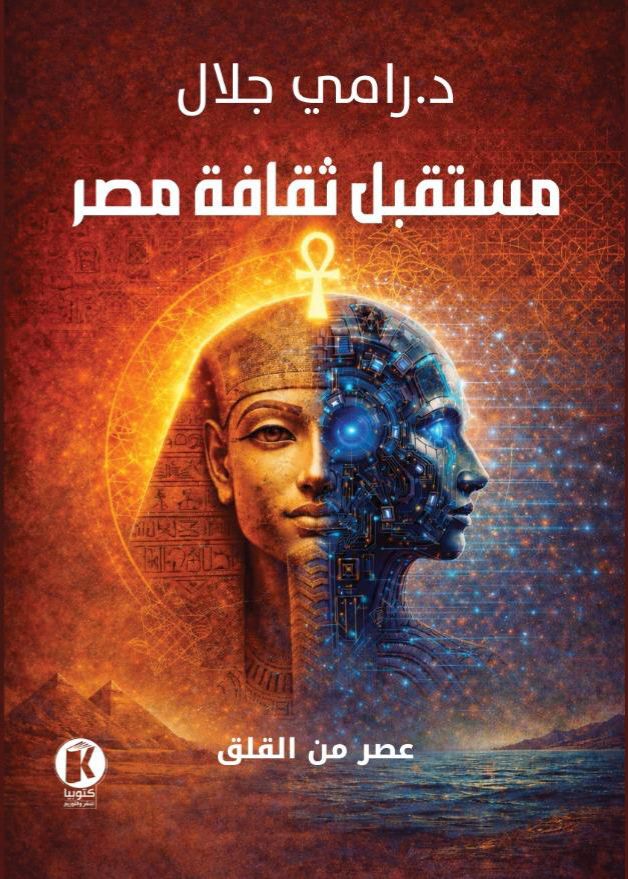
In a few days, at the Cairo International Book Fair, my second book, “The Future of Egypt’s Culture: An Age of Anxiety”, will be released. This book was not written as a purely academic study, nor as a political manifesto, nor as the outcry of an angry intellectual. Rather, it is an attempt to understand what is happening to us culturally, at a moment defined by anxiety over identity, meaning, and social cohesion in a world that is fast, noisy, and open to everything except certainty.
In The Future of Egypt’s Culture, I do not treat culture as a luxury or a marginal sector, but as an invisible infrastructure underpinning both state and society. Culture here is not limited to theatres or festivals; it is the language through which we understand ourselves, the medium through which we communicate with others, and the system that produces public taste and reshapes awareness. When this system falters, societies do not collapse overnight; they begin to erode quietly.
Before proposing solutions, the book deliberately pauses before seven foundational questions largely absent from cultural debates in Egypt. Culture is not treated as an administrative file or a budgetary item, but as a shared public meaning. These questions are not theoretical exercises; they form the gateway to the entire book, because when meaning is not consciously shaped, it forms elsewhere and turns from a source of cohesion into a silent arena of conflict.
The book diagnoses what I describe as “soft cultural erosion”, a process that makes little noise, yet weakens symbolic power, distorts awareness, and leaves the public sphere without governance of meaning. I examine how culture moved from paper to screens, and from screens to algorithms, and how digital platforms have become unelected cultural actors that reorder attention, taste, and knowledge according to the logic of profit rather than the public interest. In this context, I introduce the concept of cognitive national security as a practical necessity.
The book also addresses cultural justice, centralisation, the marginalisation of peripheries, and the transformation of cultural events into superficial substitutes for real systems of production. I argue clearly that the crisis is not a lack of talent or imagination, but a fragility of design, specifically in how culture is funded, governed, and integrated into education, media, and the economy.
The title of this book intentionally echoes an earlier moment in Egypt’s intellectual history, when leading thinkers debated how culture and education could enable the country to enter modernity in the early twentieth century. I write today, however, from a radically different global context. Europe is no longer the centre of the world, and we now live amid multiple overlapping “states”: social media, digital platforms, the creative economy, fragmented identities, and the empowered individual.
Our anxieties today are therefore more complex: symbolic emptiness, cultural erosion, and identity disorientation in digital space. We are no longer searching only for Egypt’s place in the world, but for its future within itself, its ability to reclaim its narrative and remain present as a living meaning rather than a historical symbol.
In its final chapter, the book calls for what I describe as a “new cultural contract”, one that rejects mutual suspicion, authoritarian control, and chaotic improvisation alike. Instead, it argues for a partnership based on clear guarantees and practical mechanisms that allow for accumulation, continuity, and measurable impact. Culture, after all, is not governed by good intentions alone, but by design.
The Future of Egypt’s Culture: An Age of Anxiety does not offer final answers. It is a draft of necessary questions and an early warning against cultural collapse if left unmanaged. It is written for those who sense that what is happening culturally is more dangerous than it appears, and that the battle over meaning is no less critical than those over economics or politics.
I hope this book opens a serious discussion, not only about culture, but about the future of this country itself because those who fail to see culture as a priority today will pay tomorrow’s price in collective conscience and in society’s very ability to endure.
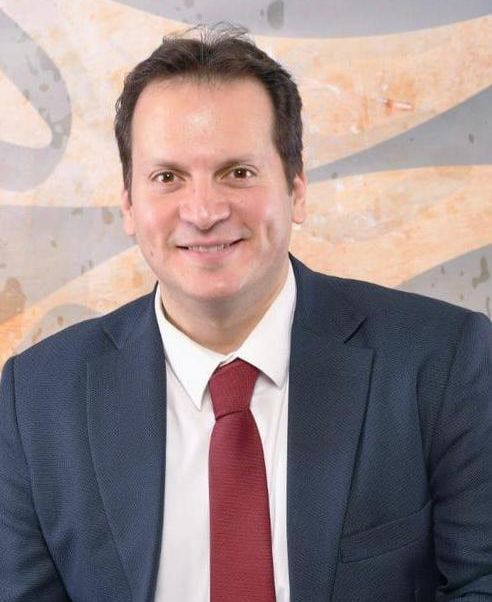
Dr Ramy Galal is an Egyptian writer and academic specialising in public management and cultural policies. He has authored studies on cultural diplomacy, the orange economy, and restructuring Egypt’s cultural institutions.
Galal holds a PHD degree from Alexandria University, a master’s degree from the University of London, and a Diploma from the University of Chile.
A former senator, and former adviser and spokesperson for Egypt’s Ministry of Planning. He was also the spokesperson for the Egyptian Opposition Coalition.