

When a major event erupts at a given moment, and distant corners of the world begin to tremble, the real source of anxiety is rarely the event itself, but rather the way it is read and interpreted. What has recently unfolded in Venezuela is unsettling, not because it happened in Latin America, but because it occurred in a world that has largely lost its ability to distinguish between the “peripheral” and the “central,” between what can be contained and what may suddenly turn into a dangerous precedent. We are living within a tense international system, fragile in trust and poor in certainty, where rules are no longer solid enough to prevent slippage, nor flexible enough to absorb shocks. In such a world, any break from the norm is instantly perceived as a stress test: do red lines still exist, or has everything become open to redefinition by force?
The issue, therefore, is not Venezuela itself, nor the specific nature of its political crisis or internal power balances. The real issue lies in the global context in which the event occurs. It is a context where open wars coexist with postponed ones, where conflicts are managed through short-term containment rather than genuine resolution, and where major crises are left without a final framework. When that framework is absent, facts turn into signals, and every precedent becomes material for speculation rather than explanation. This is where political-psychological contagion begins: if it happened there, could it happen here? And what was unthinkable yesterday, has it become possible today?
Within this landscape, the Middle East is not a party to the Venezuelan event, yet it is always present in the interpretation. The region has lived for years in a state of chronic tension, where the causes of conflict accumulate without real release, and where balances are managed with great precision but extreme fragility. As a result, the collective imagination does not need a direct causal link to summon worst-case scenarios. The mere sense that the “ceiling” has shifted somewhere else is enough to trigger calculations here. The region already stands on an open edge, and any miscalculation can carrycosts far higher than in most other parts of the world.
The real danger, in this context, is not a decision to go to war, nor an explicit declaration of confrontation, but the erosion of the rules that until recently gave decision-makers a minimum degree of predictability. When rules erode, political action is no longer governed by clear logic, but by fluctuating estimates, ambiguous messages, and rushed reactions. Misunderstandings multiply, small incidents lose their limited character, and they can easily escalate into major crises. History repeatedly reminds us that great explosions rarely begin with grand decisions; more often, they start with a small mistake made at a moment of profound uncertainty.
What further complicates matters is that the world no longer possesses a single centre of gravity capable of effective control, nor a coherent deterrence system comparable to earlier periods. We are facing a multipolar world without multipolar rules and strategic competition without a new international social contract. In this vacuum, every crisis becomes an unspoken test of the limits of the possible, every international silence a potential message, and every partial move a precedent ready for generalisation.
For this reason, the anxiety echoing across the Middle East today is not tied to Venezuela as an event, but to a world that has become difficult to read, fast-moving, and poor in guarantees. Escalation in the region was anticipated at earlier moments and did not occur, but it was not eliminated; it was merely postponed. And postponement, within a system of eroding rules, does not signify stability; it signals the accumulation of error.
In this sense, Venezuela is neither a cause nor a model; it is a mirror. A mirror reflecting a world that no longer feels secure about itself, nor confident in its mechanisms of restraint. In such a world, fragile regions are not threatened by war because they seek it, but because they are more vulnerable to miscalculation. This, precisely, is the greatest danger: that uncertainty shifts from being a temporary condition into a permanent structure, and that error, rather than deliberate decision, becomes the primary driver of the history ahead.
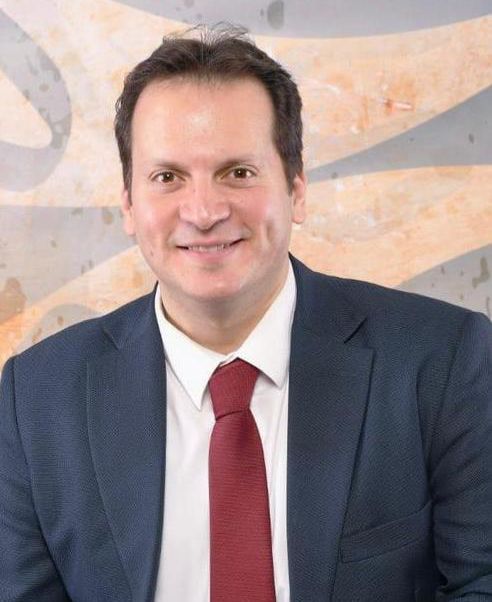
Dr Ramy Galal is an Egyptian writer and academic specialising in public management and cultural policies. He has authored studies on cultural diplomacy, the orange economy, and restructuring Egypt’s cultural institutions.
Galal holds a PHD degree from Alexandria University, a master’s degree from the University of London, and a Diploma from the University of Chile.
A former senator, and former adviser and spokesperson for Egypt’s Ministry of Planning. He was also the spokesperson for the Egyptian Opposition Coalition.
