

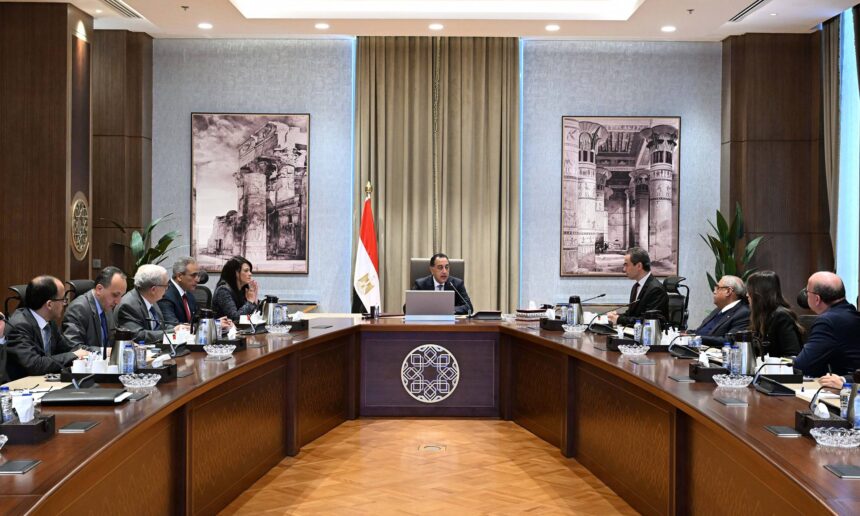
Prime Minister Mostafa Madbouly held a meeting on Monday to review measures aimed at enhancing the performance efficiency of state-owned economic authorities, with particular focus on the National Media Authority (NMA), within the framework of the government’s broader structural reform agenda.
During the meeting, Madbouly said a specialised committee—known as the Committee for the Reform and Restructuring of Economic Authorities—has been formed to strengthen governance across state-owned economic entities. The committee is mandated to assess the challenges facing each authority and to develop tailored restructuring mechanisms aligned with their respective capacities, with the aim of ensuring the sustainability of their core functions.
The Prime Minister noted that the committee has already convened several times, during which an initial assessment of economic authorities was conducted. This will be followed by a series of meetings with the heads of the relevant entities to formulate a clear and comprehensive reform roadmap.
Madbouly stressed the importance of the National Media Authority and its role in promoting cultural and social awareness, fostering knowledge and enlightenment, contributing to the shaping of Egypt’s national identity, and reinforcing social values and cohesion. He also underscored the need for the Authority to keep pace with rapid developments in the media sector, reaffirming the government’s full readiness to support efforts aimed at restoring the NMA’s leadership role and institutional standing.
For her part, Minister of Planning, Economic Development and International Cooperation Rania Al-Mashat reviewed the role of the reform committee and the current status of each economic authority. She explained that the committee is responsible for implementing comprehensive structural reforms to ensure the optimal utilisation of state assets, address key challenges facing economic authorities, enhance their operational efficiency, and increase their contribution to gross domestic product—one of the government’s top priorities.
Head of the Technical Secretariat of the Committee for the Reform and Restructuring of Economic Authorities Hussein Eissa outlined the outcomes of the committee’s first phase, noting that 59 economic authorities were reviewed. In principle, it was agreed to retain 39 authorities, liquidate or abolish four, merge seven into other entities, and convert nine from economic authorities into public authorities for various considerations.
Eissa added that consensus has been reached on retaining several key economic authorities, including the National Media Authority, while emphasising the need to improve performance efficiency, implement restructuring programmes, and develop operational strategies to maximise available resources. He also highlighted proposals aimed at increasing the NMA’s financial revenues, noting that the Ministry of Finance has already put forward measures to provide financial support.
During the meeting, NMA Chairperson Ahmed Al-Moslemany reviewed a number of recent steps, including contracting a specialised company to manage the Authority’s social media platforms—an area that previously lacked an organised structure. He also revealed that preparations are underway to launch a dedicated digital platform for Maspero, leveraging its extensive content archive.
Al-Moslemany further noted ongoing efforts to reform Sawt Al-Qahira Company and its advertising arm, alongside steps to merge certain television channels and upgrade others. He confirmed that a comprehensive development plan, encompassing restructuring and efficiency enhancement, is in its final stages and is scheduled to be presented by the end of January.
The meeting also reviewed the status of efforts to resolve financial entanglements between Maspero and the National Investment Bank, as part of broader measures to remove obstacles to reform and support the National Media Authority’s financial sustainability.


