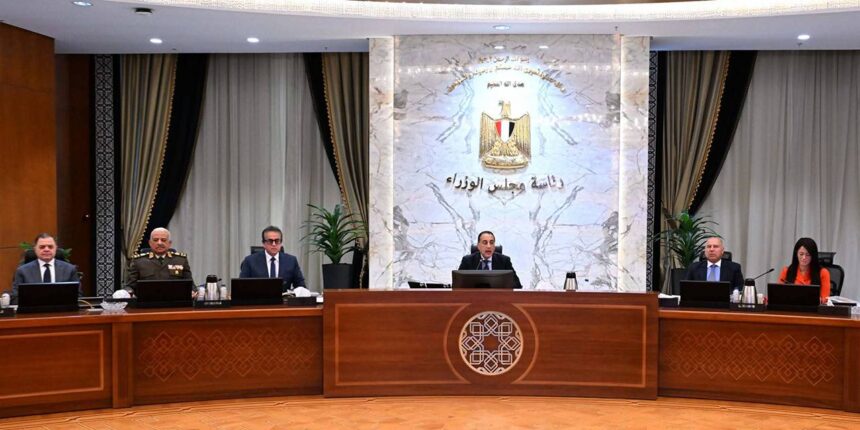
At its 72nd meeting, chaired by Prime Minister Mostafa Madbouly, the Egyptian Cabinet approved a package of key decisions spanning traffic regulation, healthcare, infrastructure development, vocational training, and economic reform.
The Cabinet endorsed amendments to Traffic Law No. 66 of 1973, introducing stricter penalties for selected violations to enhance public safety and curb road accidents. The amendments impose administrative fines and additional taxes on vehicles operating without valid licenses or expired registrations. They also set fines ranging from EGP 2,000 to EGP 10,000 for speeding and improper lane usage.
Harsher penalties—including doubled fines and license suspension—will apply to repeat offenders involved in littering, excessive noise, or unsafe transport of goods. The revisions further criminalize driving without a license or tampering with vehicle license plates, with imprisonment for repeat offenses. Penalties for commercial transport violations have also been increased, combining higher fines with potential jail sentences.
In the healthcare sector, the Cabinet approved a decision identifying healthcare and administrative assets to be transferred to the General Authority for Healthcare and the General Authority for Universal Health Insurance in the governorates of Port Said, Ismailia, South Sinai, Suez, and Aswan. The Ministry of Health will coordinate with relevant bodies to ensure these facilities meet quality standards and are fully integrated into the universal health insurance system.
The Cabinet also approved amendments to the executive regulations governing the settlement of certain building violations. These include adding Al-Azhar University and private universities to the list of authorized entities permitted to issue engineering reports, as well as clarifying procedures for calculating partial construction works in unauthorized buildings. The changes aim to streamline compliance while safeguarding state interests.
Recommendations from the Ministerial Engineering Committee were endorsed to award and extend contracts for dozens of infrastructure projects across multiple ministries, including Housing, Transportation, Higher Education, Endowments, Industry, and the Urban Development Fund. The measures are intended to maximize returns on prior investments and accelerate project completion.
In vocational training, the Cabinet approved contracting Ibda Edu to manage and develop 38 training centers under the Ministry of Labor. The initiative aims to align training programs with labor market needs, improve vocational education quality, and support national industrial development.
The Cabinet also reviewed Egypt’s preparations to participate in the World Bank’s “Ease of Doing Business” report, including a proposed reform matrix reflecting input from the business community. This effort forms part of a broader strategy to enhance investment competitiveness, advance legislative reforms, and accelerate digital transformation.
As part of this agenda, Egypt Development Investment Company (EDIC) was tasked with implementing urgent digital transformation projects for the General Authority for Investment and Free Zones. These include establishing a unified digital platform for business services, licensing, and operational utilities to simplify investor access through the Egypt Digital Platform.
Additionally, the Cabinet approved guidelines for restructuring Egypt’s economic authorities, emphasizing financial and administrative independence, the adoption of commercial management practices, and sustainable resource management. The government also reviewed outcomes from the Supreme Committee for Economic Authorities, established in 2022.
Concluding the session, the Cabinet approved a contract between Dakahlia Governorate and the North Delta Electricity Distribution Company to provide power connections to the Ben Zaid area in Mansoura, supporting broader efforts to enhance essential public services.