

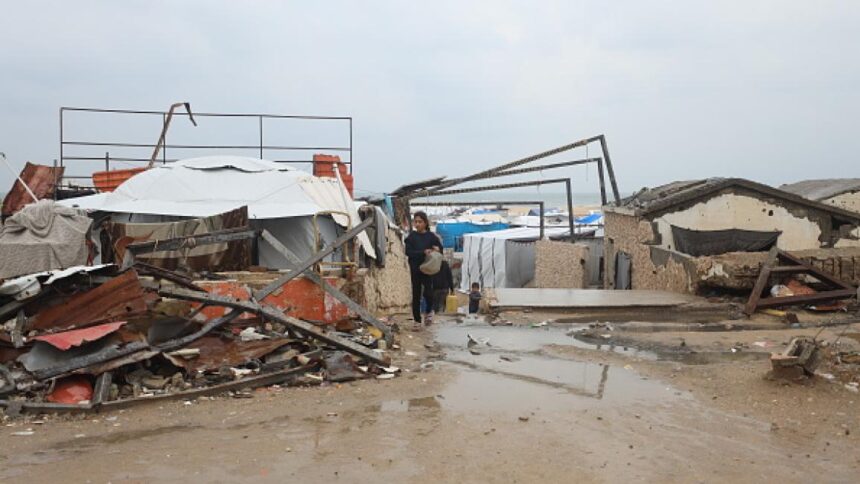
Gaza’s health ministry said on Tuesday that six wounded people and two bodies recovered from the rubble had arrived at hospitals over the past 24 hours, as officials warned that freezing winter conditions were worsening an already dire humanitarian situation.
The ministry said that since a ceasefire took effect on Oct. 11, 2025, at least 393 people have been killed, 1,074 wounded and 634 bodies recovered across the enclave. The overall death toll from Israel’s offensive has risen to 70,667, with 171,151 people wounded since Oct. 7, 2023.
US President Donald Trump said on Monday he would review whether recent Israeli strikes in Gaza, including an attack on Saturday that killed a senior Hamas figure, violated the ceasefire agreement. Trump dismissed reports that he had sharply criticised Israeli Prime Minister Benjamin Netanyahu over the strike, calling them false.
In The Hague, the Appeals Chamber of the International Criminal Court rejected Israel’s challenge to arrest warrants issued for Netanyahu and former defence minister Yoav Gallant, the court said in a statement. Judges also rejected Israel’s request to halt the court’s investigation into the conduct of the war in Gaza.
On the ground, medical officials warned that plunging temperatures and severe fuel shortages were putting lives at risk, particularly among children. Jamil Suleiman, head of Al-Rantisi and Al-Nasr children’s hospitals, said both facilities were recording a dangerous rise in hypothermia cases among children sheltering in tents.
“Hospitals are operating under near-impossible conditions,” Suleiman said, citing acute fuel shortages, the lack of heating equipment and limited electricity. He said medical teams were forced to treat critical cases with rudimentary means that fell far short of what was needed.
The health ministry reported the death of a two-week-old infant, Mohammed Khalil Abu al-Khair, who died from severe hypothermia after being admitted to intensive care.
Hamas said it had fully adhered to the ceasefire since it came into force. Senior Hamas official and negotiator Ghazi Hamad accused Israel of repeated and deliberate violations that risked collapsing the agreement, urging mediators to intervene to prevent further breaches.
Hamas spokesperson Hazem Qassem said Gaza was facing a deepening humanitarian disaster driven by harsh weather and the devastation of war. He said tents and shelters had been flooded, heating was unavailable and Israel had allowed in less than 10% of the agreed fuel supplies. Without substantial deliveries of shelter materials and fuel, he warned, more deaths—especially among children—were likely.
The United Nations said Israel continued to obstruct the entry of humanitarian aid into Gaza despite worsening winter conditions. Deputy UN spokesperson Farhan Haq told reporters that the risk of newborns freezing to death was rising as heavy rain and cold weather further degraded living conditions.
Haq said the UN and its partners had distributed thousands of tents and tarpaulins over the past week, along with food and hygiene supplies, but had been forced to scale back assistance because of access restrictions. Needs continued to far exceed the capacity of aid workers to respond, he said, calling for the removal of obstacles so aid could reach all those in need.
