

An Egyptian archaeological mission from the Supreme Council of Antiquities has uncovered a group of rock-cut tombs dating back to the Old Kingdom during the current excavation season at the Qubbet El-Hawa necropolis in Aswan.
The discovery was announced in a statement by the Ministry of Tourism and Antiquities, noting that the tombs feature burial shafts and chambers. Located on the west bank of the Nile in Aswan, the site is considered one of Upper Egypt’s most significant archaeological areas.
Minister of Tourism and Antiquities Sherif Fathy reaffirmed the ministry’s commitment to providing technical and logistical support to archaeological missions, ensuring a conducive working environment that facilitates further discoveries and sheds new light on Egypt’s rich heritage. He added that such finds reinforce Egypt’s standing on the global cultural tourism map.
For his part, Secretary-General of the Supreme Council of Antiquities Mohamed Ismail Khaled highlighted the importance of the discovery, noting that it adds to the historical value of Qubbet El-Hawa.
Preliminary studies indicate that the tombs date to the Old Kingdom and were later reused during the First Intermediate Period and the Middle Kingdom, underscoring the site’s sustained prominence across successive historical eras.
He added that the mission will continue documentation and scientific recording of the finds as part of the council’s academic and research mandate.
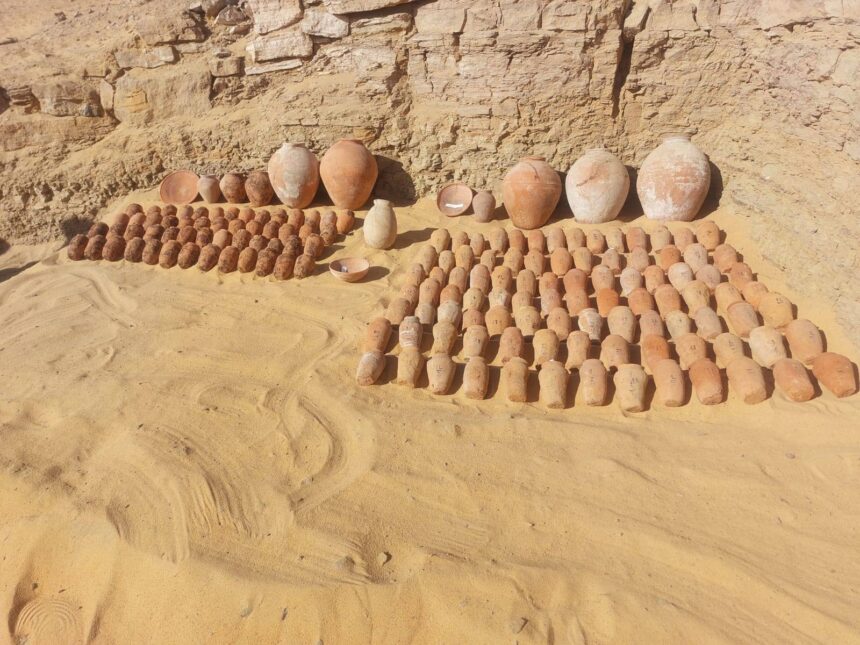
Meanwhile, Head of the Egyptian Antiquities Sector at the Supreme Council of Antiquities Mohamed Abdel-Badie revealed that the mission uncovered two burial chambers containing approximately 160 pottery vessels of various sizes and shapes dating to the Old Kingdom.
Most of the vessels are well preserved and bear hieratic inscriptions. Initial studies suggest they were used to store liquids and grains.
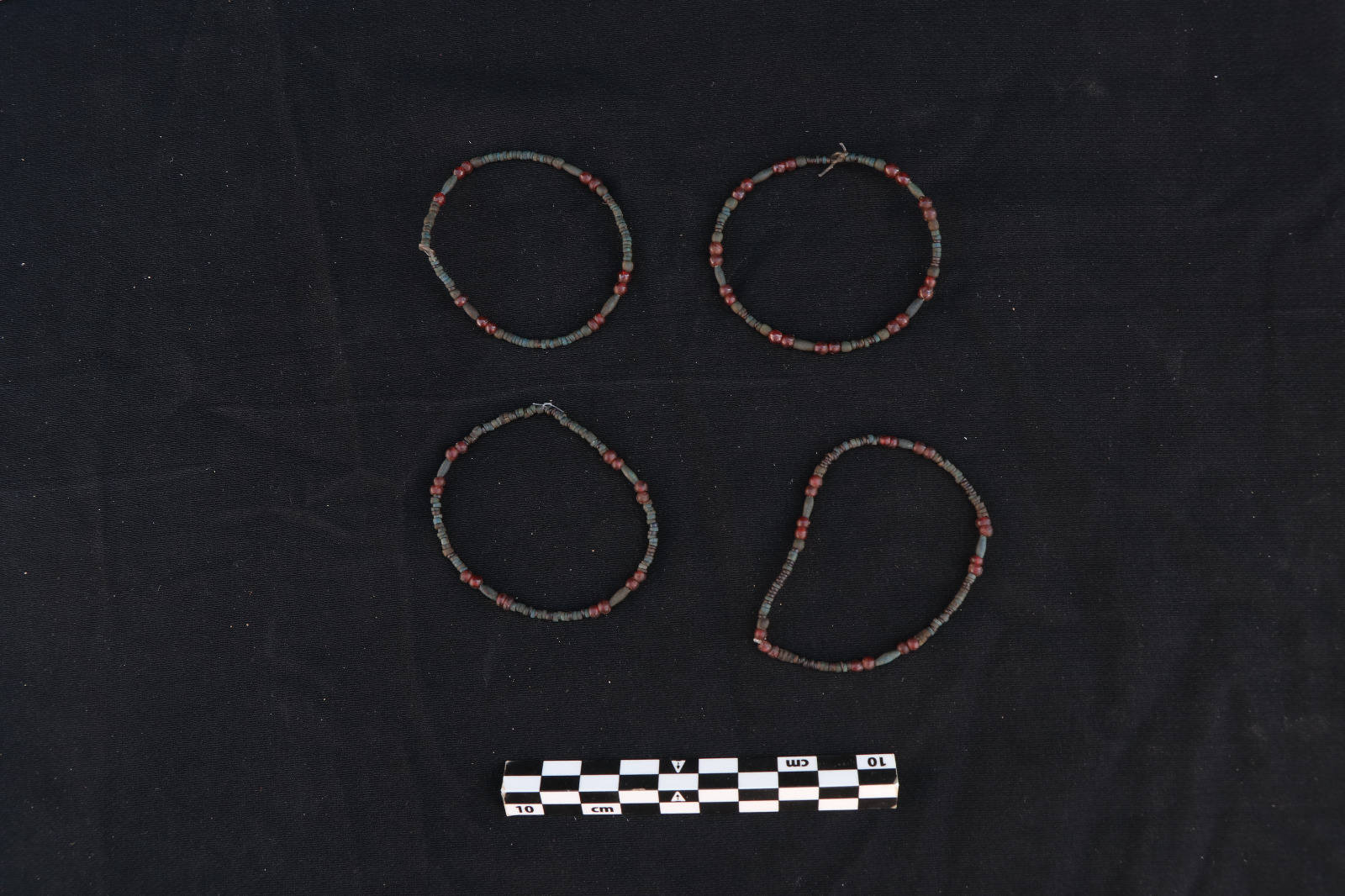
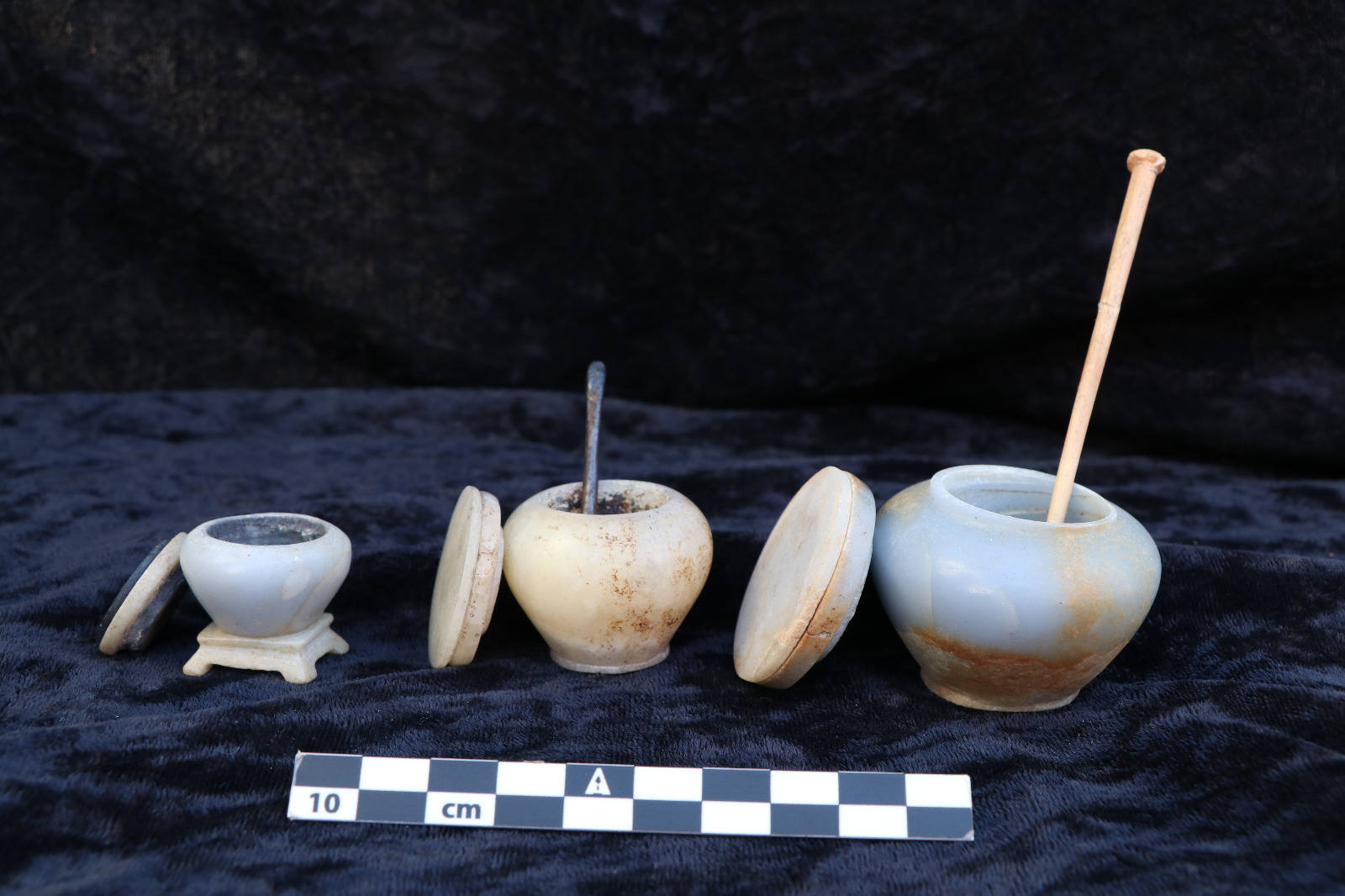
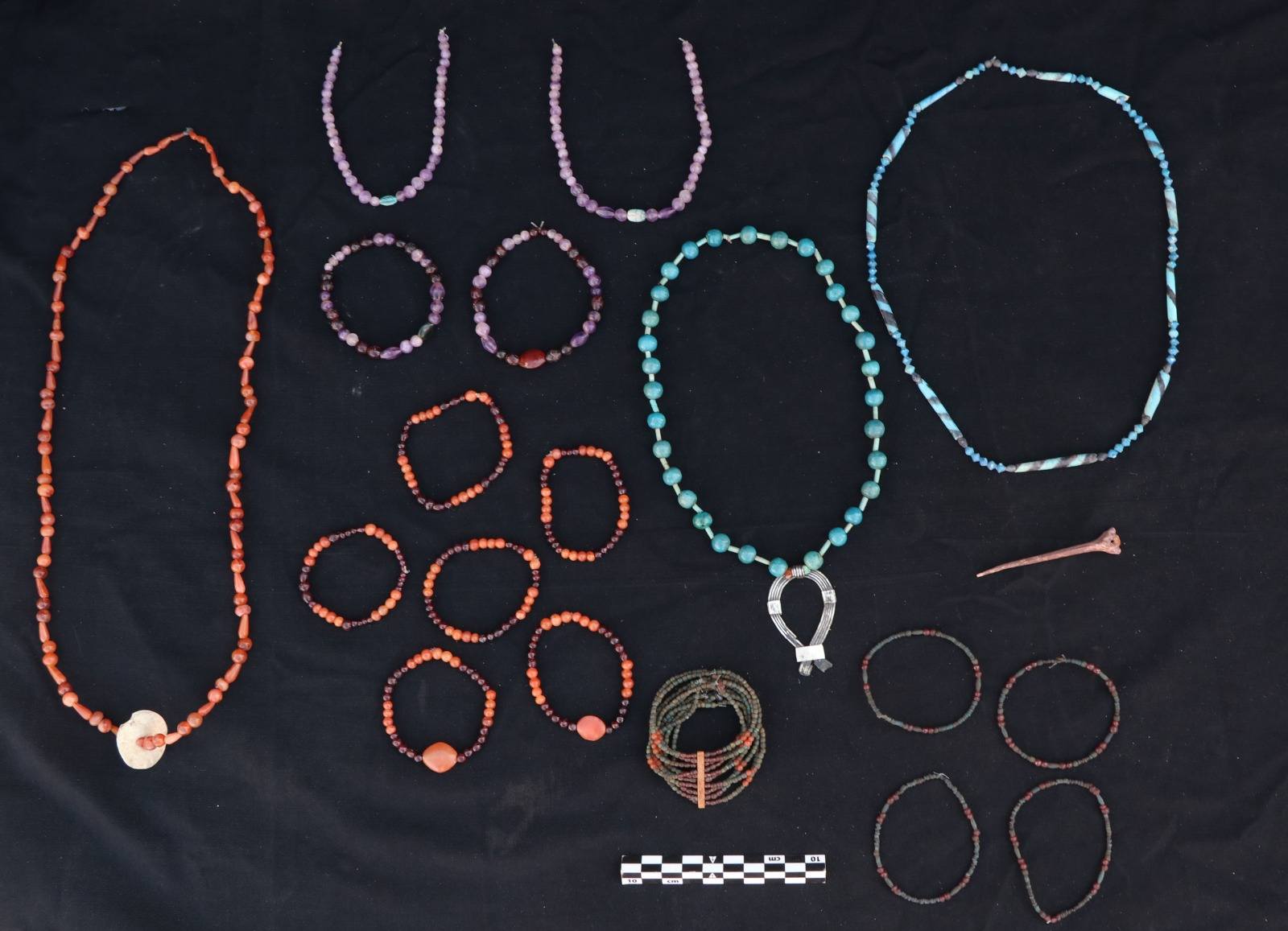
In the outer courtyard of the tombs, the team also discovered a collection of artefacts dating to the Middle Kingdom, including bronze mirrors, alabaster kohl containers, multicoloured bead necklaces, and a range of amulets.
Excavations are ongoing, with the Egyptian mission continuing efforts to uncover additional tombs and artefacts. The Qubbet El-Hawa necropolis includes burials dating from the early Old Kingdom through to the Greco-Roman period, reflecting its long-standing historical and cultural significance.


