

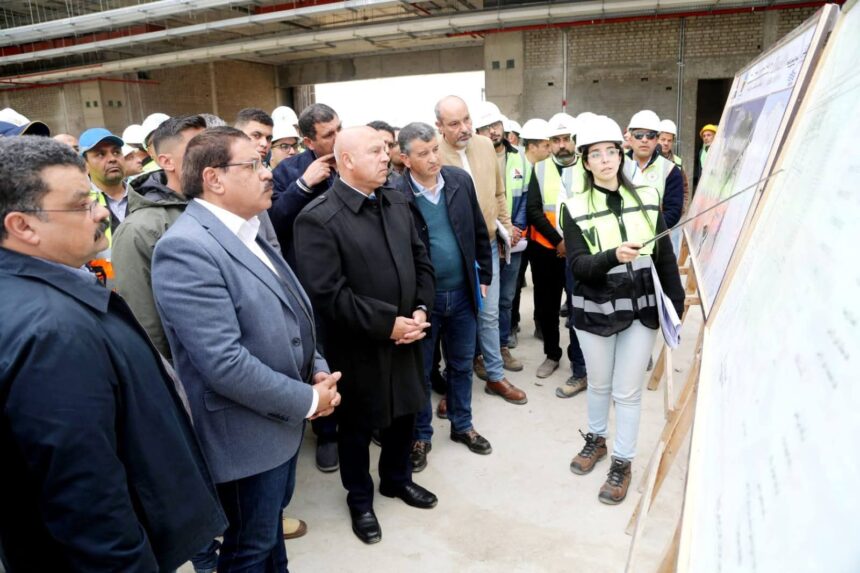
Deputy Prime Minister for Industrial Development and Minister of Industry and Transport Kamel Al-Wazir has conducted an extensive inspection tour to review progress on the first line of Egypt’s High-Speed Train network.
The tour covered the section stretching from 6th of October City to Borg El Arab, with a focus on station construction, civil works and track installation along the first phase of the Sokhna–Alamein–Matrouh line. Spanning 660 kilometres, the line forms a core component of the Sokhna–Dekheila integrated logistics corridor.
During the visit, Al-Wazir conveyed President Abdel Fattah El-Sisi’s greetings and appreciation to the project workforce, underscoring the President’s confidence in their ability to deliver what he described as a transformative national project and a major leap forward for Egypt’s transport system.
The Minister reviewed finishing works at several key stations, including 6th of October, Sphinx, Sadat City, Wadi El-Natrun, Nubaria, Borg El Arab, the Egyptian Army Stadium station in King Mariout, and Amreya. These stations are designed to serve major residential, industrial, logistical and tourism centres, while ensuring seamless integration with other transport systems, including the West Nile Monorail and the planned Alexandria Metro.
Al-Wazir also examined passenger flow arrangements within stations, from main entrances to ticket halls and platforms, in addition to plans for the optimal administrative and commercial use of station facilities.
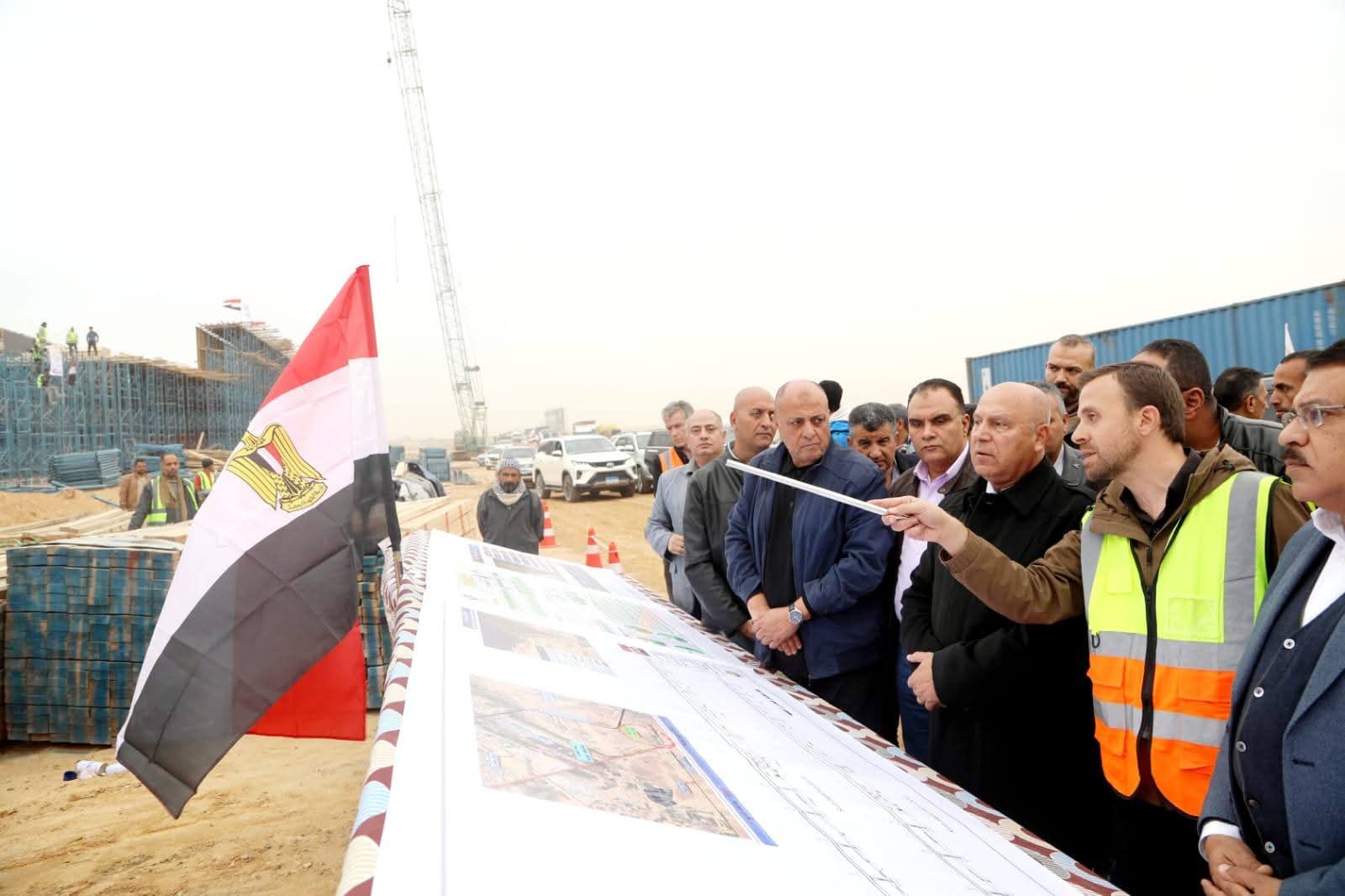
The inspection tour included a review of industrial works across the project corridor, encompassing bridges, tunnels, culverts and waterways. This section of the line comprises eight main track bridges, 26 crossing bridges, 226 culverts and two tunnels. Most of the track bridges have been completed and handed over to the executing consortium to begin ballast spreading, sleeper installation and full track works.
The Minister was briefed on progress in track-laying and electrification works being carried out by the Siemens–Orascom–Arab Contractors consortium. Rail installation has been completed over 84.3 kilometres east of the Nile, 18 kilometres west of the Nile, and 24.6 kilometres in the northern sector.
Regarding rolling stock, 21 regional trains (Desiro) have been manufactured out of a total of 34, with eight already delivered for the line. Seven high-speed trains (Velaro) have been completed out of 15, with two delivered to date, in addition to the completion of 14 electric freight locomotives dedicated to the project.
Al-Wazir stressed that the High-Speed Train represents a national milestone, as it will interconnect all regions of the country. He noted that completion of the first line establishes, for the first time, a direct land link between the Red Sea and the Mediterranean, describing it as “a new Suez Canal on rails”.
The Minister highlighted the network’s strategic role in supporting new and existing industrial zones, boosting tourism across cultural, religious and coastal destinations, serving newly developed agricultural areas, and creating integrated logistics corridors linking production centres with seaports.


