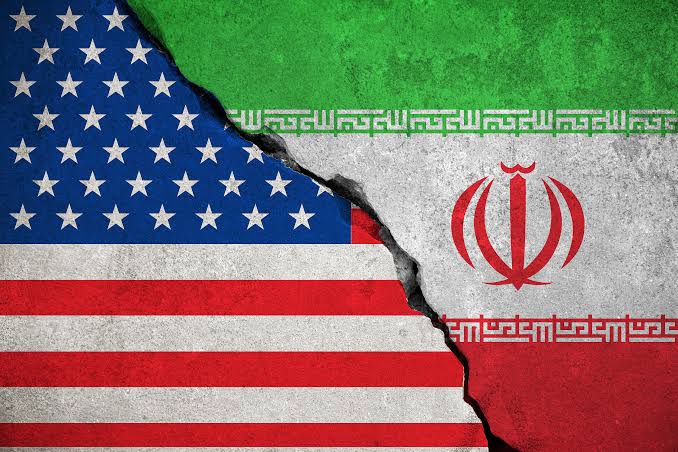
At the very least, if we analyze the situation without speculating about intentions or disregarding the overwhelming evidence before us, U.S. President Donald Trump appears determined to continue pursuing a negotiated agreement with Iran rather than resorting to military action at this stage—something he explicitly stated following a three-hour meeting with Benjamin Netanyahu, Prime Minister of Israel.
While Trump described the meeting as “very good,” Netanyahu’s doubts about his temporary ally in the White House seem to have deepened. This is not merely because Washington prefers diplomacy, but also because the United States may be unwilling to back an Israeli military strike against Tehran. Further intensifying the crisis is the possibility that ongoing U.S.–Iran negotiations may sidestep one of the most sensitive and destabilizing issues within Israeli decision-making circles: Iran’s ballistic missile program, whose range places Israeli cities well within reach.
Trump—known for delivering contradictory signals—has indicated that he expects a second round of talks next week. Yet he has simultaneously announced the deployment of a second carrier strike group to the Gulf, signaling readiness to strike Tehran should diplomacy fail. This is the same American president who began 2026 by declaring the emergence of a new global order, marked dramatically by the U.S. military’s seizure of Venezuela’s president.
In any case, it is now widely understood that a successful negotiation would defuse the crisis, drain a significant portion of the region’s tension, and, most importantly, push the specter of war off the table—at least for the foreseeable future. Israel, however, would likely be the only party dissatisfied with such an outcome. It is improbable that it would allow matters to unfold so easily. Even lacking the full political and military cover required to dismantle Iran’s nuclear and ballistic programs, Israel retains an intelligence option—one that aims at destabilizing or even removing the clerical regime, in hopes of restoring relations to what they were prior to the 1979 Khomeini Revolution.
Within Israel, there are those who believe Trump’s posture provides a certain degree of tacit cover should Tel Aviv decide to take parallel steps against Tehran’s leadership—particularly as it continues to struggle with mounting domestic unrest.
Before anything else, however, we must acknowledge a fundamental reality: the prediction of social transformations and revolutions has historically failed—often spectacularly. Even the most advanced intelligence services and the most distinguished scholars have repeatedly proven incapable of forecasting such upheavals. For instance, leading Sovietologists—who dedicated their lives to studying the Soviet system—did not foresee the collapse of the Soviet Union. Likewise, intelligence agencies failed to anticipate the sudden disintegration of the Assad regime in Syria. Social science methodologies may help interpret events retrospectively, but they lack the tools necessary for reliable prediction. Even highly sophisticated intelligence institutions routinely fail to anticipate large-scale social unrest.
In Iran, the situation is even more complex. It is a multiethnic state with a layered social structure and a deeply intricate cultural fabric. Under such conditions, the capacity for accurate understanding—let alone prediction—remains extremely limited. When analyzing developments in Iran, intellectual humility is essential, along with a healthy degree of skepticism toward expert assessments.
There is no doubt that the recent wave of protests carries profound significance. It transcends social strata and sectors, directly affecting the daily lives of Iranians. The government in Tehran appears increasingly unable to perform basic governance functions, struggling even to provide essential services such as water after decades of war and international economic sanctions.
Yet even if these protests shake the pillars of the regime, it remains difficult to determine whether they will culminate in the anticipated end of the Islamic Republic. It is worth noting that the government has not yet deployed the full force of its coercive apparatus. In fact, it has granted the protesters a measure of legitimacy by acknowledging the severity of the crises facing ordinary citizens—perhaps because it, too, cannot predict the consequences of large-scale repression.
Even prior to the outbreak of unrest, Israel had concluded that it might need to intervene once again to prevent Iran’s rearmament with surface-to-surface missiles. This was reportedly one of the issues presented by the Israeli prime minister to the American president. What would be the repercussions of Israeli military action on the protests inside Iran? Would it inflame them further, or instead drive the population to rally around the regime? No one possesses a testable answer.
Suppose Israel were tempted to eliminate the Supreme Leader and his designated heir. Would such an act increase the likelihood of widespread uprising—or suppress it entirely? The outcome would depend on variables whose dimensions remain exceedingly difficult to map or measure.
Dr. Hatem Sadek – Professor at Helwan University