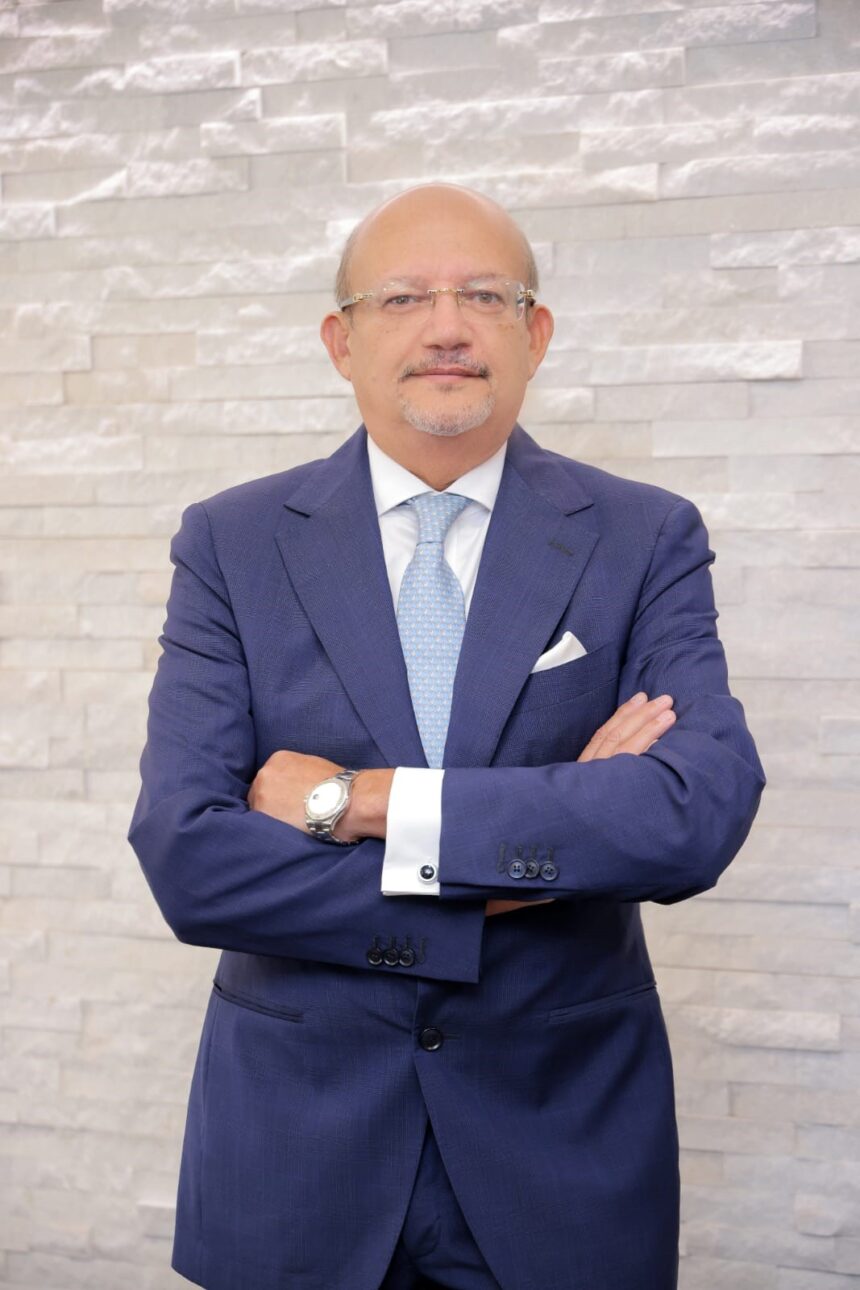
Hussein Refaie, Chief Executive Officer and Managing Director of the Industrial Development Bank (IDB), said the bank is targeting expansion across all sectors in 2026 as it moves forward with implementing ambitious plans aimed at strengthening its position as a universal commercial bank while reinforcing its developmental role in the Egyptian economy.
In an interview with Daily News Egypt, Refaie said the bank’s 2026 strategy builds on the significant milestones achieved in 2025, a year he described as transformational in terms of financial performance, institutional restructuring and operational modernisation. The bank aims to provide integrated banking services, offer innovative financial solutions and support national development in line with Egypt Vision 2030.
Strong financial performance and capital strengthening
Refaie said the bank delivered exceptional financial results during 2025, reflecting disciplined management and the successful execution of expansion-oriented strategic objectives.
By the end of September 2025, IDB recorded pre-tax profits of EGP 1.3bn. Net interest income rose by 36% compared with September 2024, reaching EGP 2.3bn, while net fee and commission income increased by 62% to EGP 251m.
Customer deposits grew by 47% to reach EGP 53bn, while the loan portfolio expanded by 23% to EGP 32bn. This brought the loan-to-deposit ratio to 60%, reflecting a balanced approach between liquidity management and credit expansion.
The bank also strengthened its capital base, increasing authorised capital to EGP 10bn and paid-up capital to EGP 5bn. Refaie noted that enhancing capital adequacy was a strategic priority, enabling the bank to expand financing for large and medium enterprises and to participate more actively in syndicated loans.
He stressed that these results were achieved amid complex local and global economic challenges that required prudent decision-making and a clear strategic vision.
A pivotal phase in the bank’s history
According to Refaie, 2025 marked a pivotal phase in IDB’s history. The bank faced intertwined economic pressures, including global market volatility and domestic reform dynamics, yet managed to navigate them through professional management and institutional discipline.
He explained that the bank adopted a comprehensive approach centred on restructuring organisational frameworks, enhancing financial governance and improving operational efficiency. These measures ensured sustainable growth and restored the bank’s standing as a competitive national banking institution.
The transformation was not limited to financial indicators, but extended to rebuilding institutional culture, reinforcing accountability mechanisms and embedding performance-based management systems.
Comprehensive transformation plan
Refaie said IDB implemented a far-reaching internal transformation plan covering organisational structures, credit policies, governance frameworks and risk management systems.
The bank aligned its practices with best international banking standards and regulatory requirements issued by the Central Bank of Egypt. Enhanced risk assessment methodologies, stricter credit controls and improved monitoring mechanisms contributed to strengthening asset quality and preserving portfolio stability.
This institutional rebuilding directly reflected in improved financial performance and enhanced market confidence. The bank achieved balanced growth supported by prudent credit expansion and rising customer deposits, signalling renewed trust in its operations.
Refaie added that rebuilding governance systems and reinforcing compliance frameworks have positioned IDB as a modern universal commercial bank capable of delivering advanced financial services while maintaining a strong developmental focus.
Financing national and development projects
During 2025, IDB played an active role in financing national and development projects, participating in banking consortia to fund infrastructure, housing and industrial projects.
Refaie stressed that supporting comprehensive economic development is at the forefront of the bank’s priorities. Particular emphasis is placed on financing projects that create employment opportunities, increase added value and enhance local production capacity.
He noted that the bank continues to prioritise productive sectors, especially industrial activities and SMEs, given their central role in driving exports, strengthening supply chains and reducing reliance on imports.
The bank’s approach combines commercial viability with developmental impact, ensuring that financing decisions contribute both to sustainable returns and to broader economic progress.
Mortgage finance and social stability
In line with national initiatives, IDB signed a cooperation protocol with the Social Housing and Mortgage Finance Fund to provide affordable financing solutions to low- and middle-income citizens under mortgage initiatives launched by the Central Bank.
Refaie said this cooperation reflects the bank’s commitment to promoting social stability and improving living standards. According to the latest report issued by the Social Housing and Mortgage Finance Fund, IDB’s contributions to mortgage finance reached approximately EGP 2.207bn by the end of January 2026.
The bank ranks among the top ten participating banks in mortgage finance initiatives, highlighting its active role in supporting state efforts to achieve social and economic development.
Digital transformation and technological modernisation
Refaie said 2025 witnessed significant progress in IDB’s digital transformation journey. The bank upgraded its technological infrastructure, modernised core banking systems and strengthened cybersecurity frameworks to deliver faster, safer and more efficient services.
In a key step towards operational resilience, the bank launched an alternative data centre in Borg El Arab built in line with international standards, ensuring business continuity and enhanced data protection.
The bank also implemented advanced anti-money laundering (AML) and risk-based assessment (RBA) systems provided by Pio-Tech. These systems enhance reporting capabilities, improve transaction monitoring and ensure full compliance with regulatory requirements.
Refaie noted that adopting advanced compliance technologies reinforces stakeholder confidence and strengthens the bank’s risk management capabilities.
Financial inclusion and human capital development
IDB intensified efforts to promote financial inclusion by expanding outreach programmes and targeting new customer segments, particularly youth and SME owners.
The bank aligned its initiatives with national financial inclusion policies and the directives of the Central Bank, aiming to integrate more citizens into the formal banking system.
Refaie emphasised that the human element remains a cornerstone of success. The bank invested heavily in developing staff competencies, upgrading technical skills and building a culture based on performance, discipline and teamwork.
Continuous training programmes and leadership development initiatives have supported institutional transformation and enhanced service quality.
Smart expansion and branch development
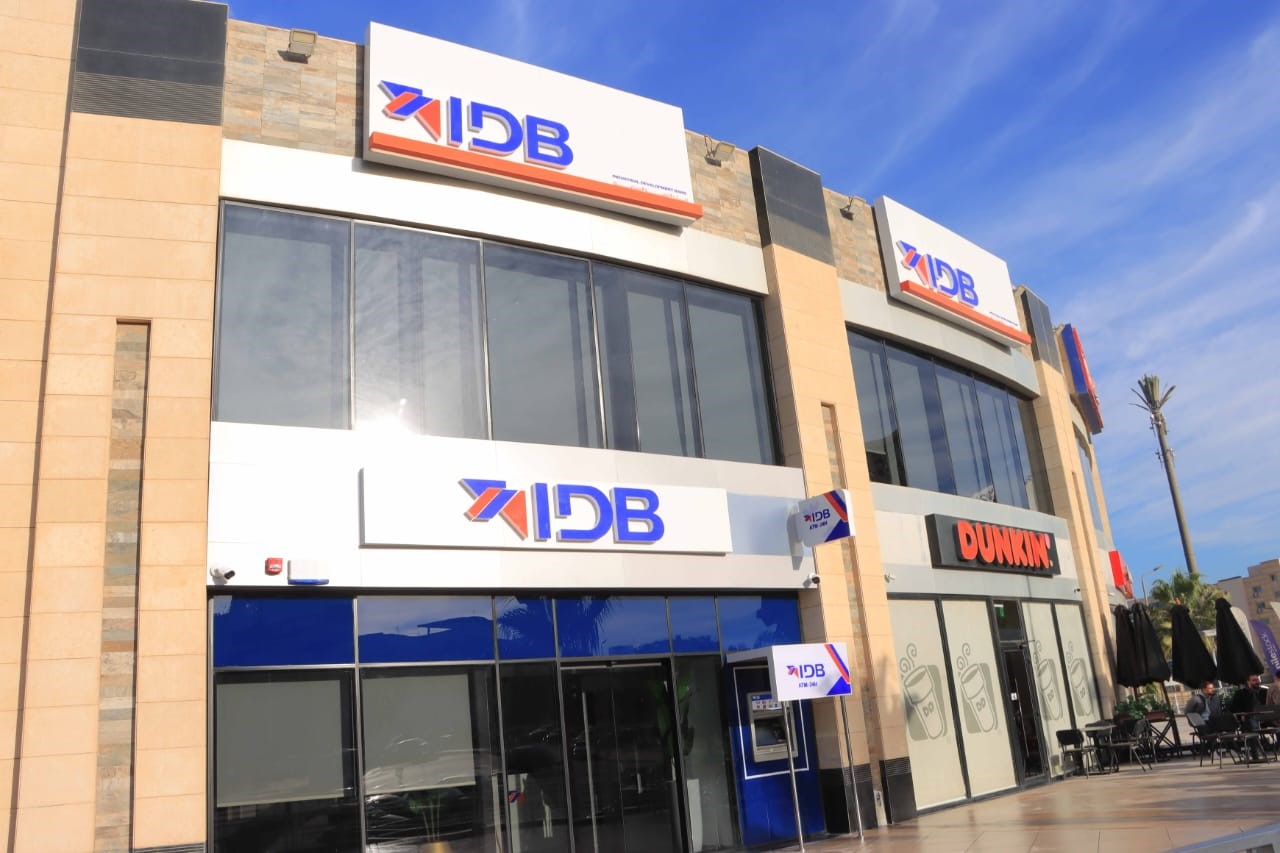
Looking ahead to 2026, Refaie said IDB will proceed with implementing a smart expansion plan through opening new branches in strategic locations across Egypt.
The bank has also refurbished several branches in line with modern banking standards, aiming to improve customer experience and integrate digital solutions within physical service channels.
Upgrading the branch network forms part of the bank’s strategy to strengthen its geographical presence, particularly in key commercial and industrial zones, while enhancing accessibility for individuals and corporates alike.
Refaie stressed that geographical expansion complements digital transformation, ensuring that customers receive integrated, high-quality services regardless of channel.
Sustainability and ESG integration
Refaie underscored that sustainability lies at the heart of IDB’s long-term strategy. The bank is embedding environmental, social and governance (ESG) principles into financing and investment decisions to balance economic growth with environmental and social responsibility.
IDB is developing measurable green transition KPIs, directing capital towards sustainable sectors and supporting industrial transformation through environmentally responsible financing.
The bank plans to expand green financial products, including concessional green loans, bonds and sukuk, while enhancing transparency through periodic sustainability reporting.
Refaie confirmed that IDB remains committed to supporting national climate objectives and contributing to balanced economic development that safeguards resources for future generations.
Awards and international recognition
IDB’s transformation efforts were recognised through several prestigious awards in 2025. The bank received the Banking Excellence and Achievement Award for Restructuring and Development from the Union of Arab Banks.
It also obtained an honorary shield from eFinance for Financial and Digital Investments for successfully executing the first foreign currency tax bill payment through the Corporate Payment System.
At The Global Economics Awards 2025, IDB won two international awards recognising its role in empowering SMEs and strengthening industrial finance.
Refaie himself was named “Best Transformational CEO in Banking – Africa 2025” by International Business Magazine, acknowledging his leadership in institutional restructuring and strategic reform.
He concluded that 2026 will mark a new phase of expansion and consolidation, with IDB continuing to strengthen its financial position, broaden its sectoral reach and deepen its developmental impact, reaffirming its role as a universal commercial bank that combines commercial efficiency with national responsibility.