

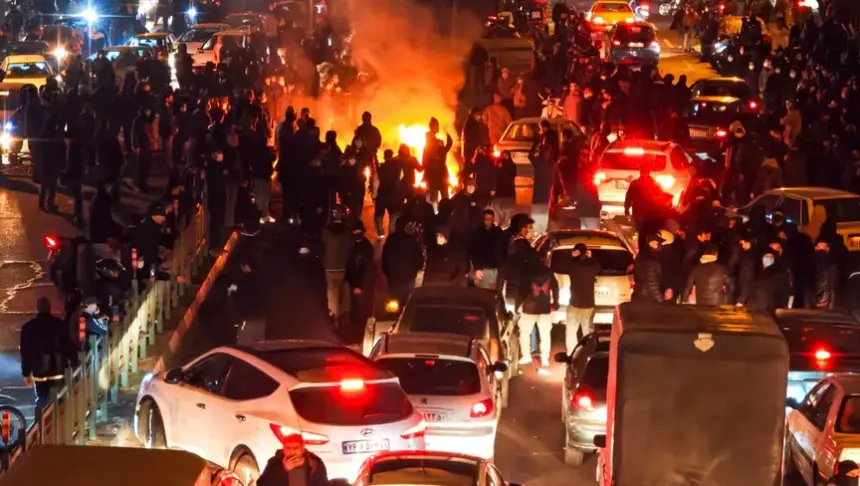
The persistent hum of surveillance drones now defines the skyline over Tehran, a mechanical replacement for the chants that echoed through the capital just days ago. For the residents of Iran’s major cities, the silence is heavy. After two weeks of the most intense civil unrest in recent history, a “cautious calm” has taken hold, but it is a stillness punctuated by grief and the shadow of state retribution.
Speaking to Reuters on condition of anonymity, locals describe a city under watch. While the streets have seen no major demonstrations since Thursday, the atmosphere remains electric. The pause in physical clashes comes as the Iranian leadership and the international community begin to process the staggering human cost of a movement that began on 28 December over economic hardship before evolving into a direct challenge to the Islamic Republic’s core.
The “kernel” of the crisis is now two-fold: a domestic casualty list that has reached catastrophic levels and a volatile diplomatic standoff between Tehran and Washington. With more than 3,000 people reported dead and Supreme Leader Ali Khamenei labelling U.S. President Donald Trump a “criminal,” the current lull appears less like a resolution and more like a pivotal breath before an uncertain next chapter.
The Human Toll: A Growing Count of the Fallen
As the state-imposed internet blackout begins to lift, the scale of the violence is coming into focus. Monitoring groups are working to verify the numbers behind the crackdown, which saw authorities use lethal force to quell “moth-like” protesters.
- Total Verified Deaths:The U.S.-based rights group HRANA reported on Saturday that it has verified 3,090 fatalities.
- Protester Casualties:Of that total, 2,885 are identified as protesters.
- A Pervasive Silence:In northern cities along the Caspian Sea, residents report that the crackdown has effectively “extinguished” the visible protests for now, though state media continues to broadcast news of fresh arrests.
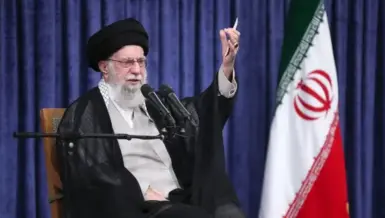
Khamenei’s Narrative: The “External Plot”
In a televised address on Saturday, Supreme Leader Ali Khamenei sought to reframe the internal crisis as a foreign assault. Directly accusing President Trump of “inciting” the Iranian people, Khamenei claimed this wave of unrest was distinct because of the U.S. President’s “personal involvement.”
“We will not drag the country into war, but we will not let domestic or international criminals go unpunished,” Khamenei stated, according to official state media. His rhetoric was sharp, promising to hunt down “rioters” both at home and abroad, describing those in exile as the most dangerous elements of the “conspiracy” linked to America and Israel.
The Washington Pivot: From “Red Lines” to Cautious Praise
The Supreme Leader’s aggressive stance coincides with a curious shift in tone from the White House. Only days after President Trump warned that “help is on the way” for Iranian dissidents—signalling potential military intervention—he appeared to step back from the brink.
The primary “red line” for U.S. action had been the mass execution of peaceful protesters. In a statement to reporters in Washington, Trump noted that Tehran had reportedly rescinded execution orders for more than 800 detainees.
“I have great respect for the fact that they cancelled that,” Trump said, though he provided no specific details on the diplomatic channels used to confirm the status of the prisoners.
This de-escalation suggests that while the U.S. remains rhetorically aligned with the protesters, the immediate threat of a military strike has subsided, replaced by a “wait-and-see” approach.
The Shadow of the Monarchy
The vacuum of leadership within the domestic protest movement has once again brought the exiled opposition into the spotlight. Reza Pahlavi, the son of the late Shah, has positioned himself as a “transitional leader,” expressing continued faith in Washington’s promises.
“I believe the President is a man of his word,” Pahlavi told reporters in Washington, calling for renewed street action from Saturday through Monday. Despite his high profile in the diaspora, Pahlavi’s ability to influence the diverse, often leaderless youth on the ground in Tehran remains the movement’s greatest unknown.
As Tehran enters another week of drone-monitored “calm,” the question is no longer if the government can maintain order, but at what cost. With the Supreme Leader vowing to settle scores and the opposition calling for a second wave, the quiet in the streets of Tehran may be the eye of a much larger storm.