Europe offers more than one model worthy of attention, and Finland stands out as a particularly revealing case. It is rarely invoked as a loud country or a traditional power, but rather as a quiet example of a state that understood early on that real investment lies not in hard resources, but in people, their awareness, tastes, and capacity for independent thinking. What defines the Finnish experience is not educational success alone, but the integration of education into a broader cultural vision that treats knowledge as a public right and culture as an invisible infrastructure of stability and progress.
Finland’s transformation began after the Second World War, when the country faced limited resources, geopolitical pressures, and no imperial or cultural reach to rely on. The strategic choice was to build a “knowledge state” grounded in equity rather than elite privilege, leading to a firm commitment to free, high-quality education for all, without class discrimination or a race driven by exams and rankings.
The Finnish education system, consistently among the world’s top performers, relies not on pressure or rote learning, but on trust, trust in teachers, in students, and in society itself. There are no harsh centralised exams in early education, no excessive homework, and no public ranking of schools. The underlying philosophy is simple: the child is not a racing project, but a human one. Education aims to produce thinking, responsible citizens rather than obedient employees shaped by fear of failure.
This success, however, was never isolated from cultural policy. Finland invested in public libraries as the backbone of civic life, not merely as book repositories. In cities and villages alike, libraries function as open, free spaces for learning, dialogue, and community interaction. Culture here is daily, accessible, and closely tied to lived experience, reinforcing the idea that knowledge belongs to everyone, not to elites.
Language played a central role as well. Despite Finnish having limited global reach, the state protected and developed it, linking it to creativity, education, and technology, while simultaneously encouraging multilingualism and openness without a sense of inferiority. This balance between identity and openness remains a cornerstone of Finnish stability.

The same philosophy appears in the management of cultural taste. Finnish metal music, now a global phenomenon, was not treated as marginal or threatening. Instead, the state supported it through serious music education and institutional frameworks, allowing it to mature into a global cultural export without moral panic or aesthetic policing.
A similar logic underpins Finland’s video game industry. Global companies emerged from an educational environment that promotes coding, teamwork, and experimentation without fear of failure. Video games are understood not as trivial entertainment, but as a modern cultural industry where creativity intersects with technology, storytelling, and collective imagination.
Culturally, Finland does not export noise, but accumulates what can be described as symbolic credibility. Music, design, literature, architecture, and digital culture are seen as integral to the economy and the country’s image. The state does not dictate taste; it creates conditions for it to grow freely and responsibly.
Most importantly, the Finnish experience shows that soft power does not require spectacle. A small country can be influential because it is trusted, coherent, and consistent over time. Good education, accessible culture, trust in citizens, and equity of opportunity have produced a Finnish presence that exceeds the country’s geographic and demographic size.
For Egypt, Finland offers no ready-made formula to replicate, but a clear lesson: when culture and education are treated as long-term state policies rather than seasonal projects or symbolic gestures, progress becomes a natural outcome, not a miracle.
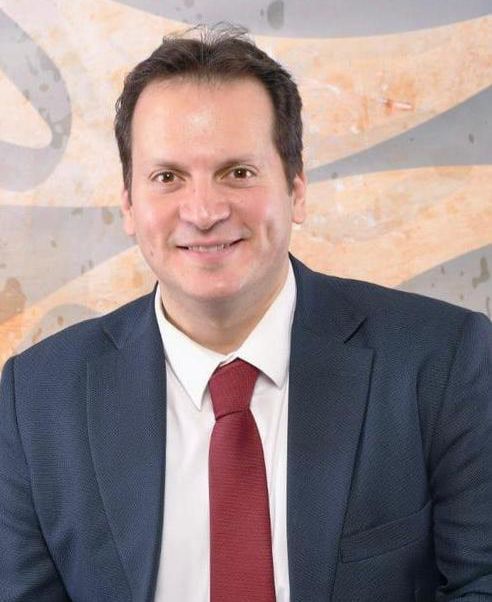
Dr Ramy Galal is an Egyptian writer and academic specialising in public management and cultural policies. He has authored studies on cultural diplomacy, the orange economy, and restructuring Egypt’s cultural institutions.
Galal holds a PHD degree from Alexandria University, a master’s degree from the University of London, and a Diploma From the University of Chile.
A former senator, and former adviser and spokesperson for Egypt’s Ministry of Planning. He was also the spokesperson for the Egyptian Opposition Coalition.