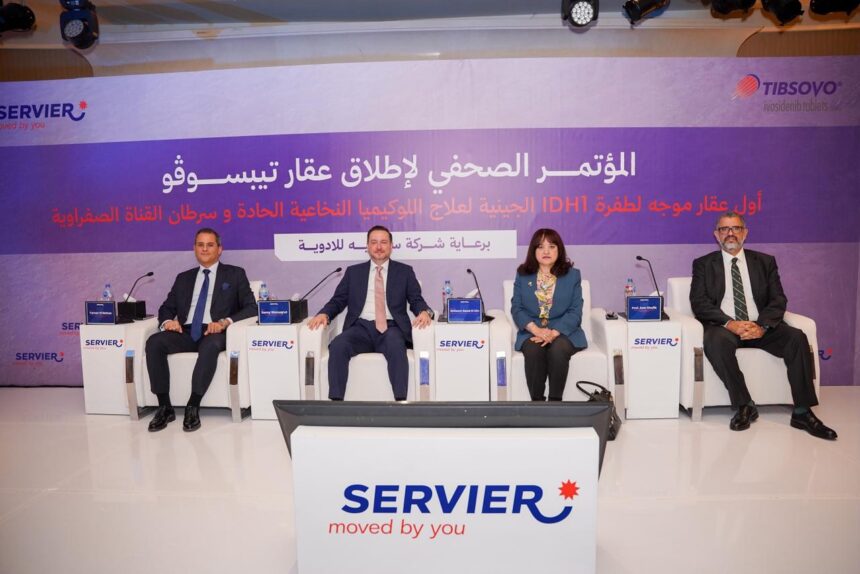
Servier Egypt has launched Tibsovo (ivosidenib), the first targeted therapy available in the country for patients with IDH1-mutated Acute Myeloid Leukemia (AML) and intrahepatic cholangiocarcinoma.
The new treatment offers a median overall survival of 29.3 months for eligible AML patients and 10.3 months for those with intrahepatic cholangiocarcinoma, according to clinical data cited by the company.
Tibsovo is approved as a first-line treatment for AML and a second-line treatment for intrahepatic cholangiocarcinoma in patients carrying the IDH1 mutation. The drug targets the specific genetic driver of the tumour, offering an alternative for patients who have historically had limited options, particularly those unable to tolerate intensive chemotherapy or stem-cell transplantation.
“Bringing Tibsovo to Egypt is yet another step in Servier’s role to expand access to treatments that address clear medical needs,” said Samy Sinnuqrut, General Manager of Servier Egypt. “Our role is to ensure that these advances reach patients in a reliable and timely way.”
AML is an aggressive blood cancer originating in the bone marrow, while intrahepatic cholangiocarcinoma is a form of bile duct cancer beginning inside the liver. Both can be driven by the IDH1 mutation.
“The availability of Tibsovo gives physicians an important new tool for managing cancers driven by the IDH1 mutation,” said Ibtisam Saad El Din, Professor of Oncology at Cairo University. “Identifying the mutation early through routine testing makes a significant difference in choosing the right treatment path.”
Data from the AGILE clinical study indicated improved event-free and overall survival for AML patients ineligible for intensive chemotherapy. Similarly, the ClarIDHy study demonstrated improved survival and disease control for intrahepatic cholangiocarcinoma patients.
“AML and cholangiocarcinoma often affect patients who cannot tolerate aggressive chemotherapy,” said Tamer El Nahas, Oncology Consultant and Professor at Cairo University. “Tibsovo provides a scientifically precise option with a more favourable tolerability profile.”
Gamal Fathy, Professor of Haematology and Bone Marrow Transplant at the Nasser Institute, noted that for AML patients, the oral therapy offers sustained clinical responses and can reduce reliance on repeated transfusions.
Servier Egypt stated that nearly 70% of the group’s global research and development investment is currently focused on oncology. The therapy is recommended by global guidelines, including the NCCN and ESMO.