

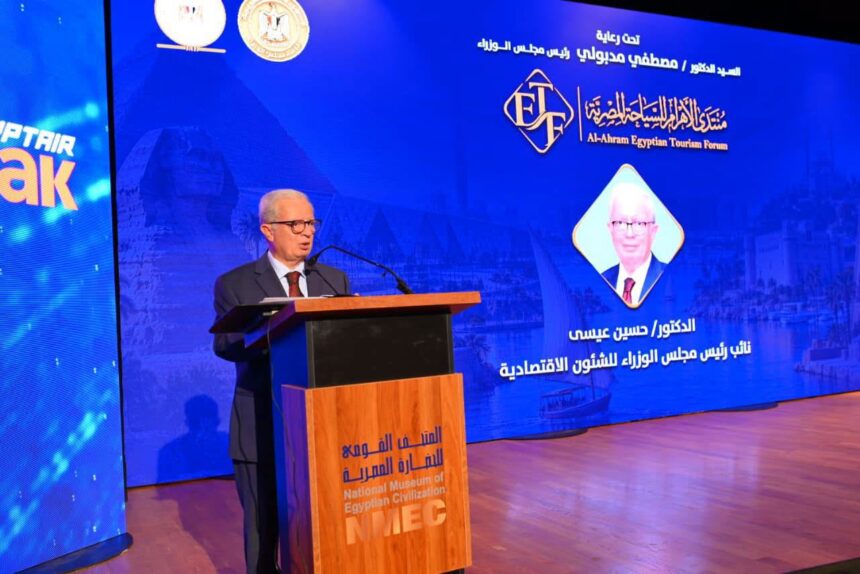
Deputy Prime Minister for Economic Affairs Hussein Eissa said tourism represents an integrated industry and a key driver of the national economy, given its pivotal role in generating foreign currency, attracting investment, creating jobs, and stimulating a wide range of related economic sectors.
Eissa made the remarks in a speech at the opening of the inaugural Al-Ahram Forum for Egyptian Tourism.
In his speech, Eissa said Egypt possesses unique tourism assets and a civilisational and human story stretching back thousands of years, encompassing its ancient history and civilisation, the Nile, beaches, and diverse natural destinations.
He also highlighted the diversity of tourism segments in Egypt, including cultural, religious, medical, sports, and ecotourism, as well as the country’s distinctive geographical location, improved infrastructure, and the authenticity of Egyptian hospitality.
Eissa said maximising the benefits of these assets requires continued work and coordinated efforts to enhance the competitiveness of Egypt’s tourism product and increase its economic returns. This includes developing tourism products and destinations, improving service quality, stimulating investment, strengthening air connectivity, and capitalising on digital transformation.
Efforts should also focus on extending tourists’ length of stay and increasing tourism spending, while ensuring the sustainability of destinations and preserving Egypt’s cultural and natural assets, he added.
Eissa said strengthening the competitiveness of Egyptian tourism is a shared responsibility. The state is working to improve the legislative and investment environment and provide the infrastructure required for growth, while the private sector plays a key role in investment, innovation, and the development of products and services.
Experts contribute their knowledge and experience, while the media continues to play its role in promoting Egypt’s diverse tourism assets and destinations, he added.
Eissa reiterated the government’s commitment to providing an environment conducive to the growth of tourism investment, addressing challenges facing its private-sector partners and investors, and continuing efforts to strengthen the competitiveness of Egyptian tourism and consolidate Egypt’s position on the international tourism map.
He also stressed the importance of the forum producing practical proposals and actionable recommendations, saying its inaugural edition should mark the beginning of sustained dialogue, partnership, and joint action.
Such efforts, he said, would support the state’s drive to turn Egypt’s tourism assets into a sustainable economic force that boosts investment and growth and creates more jobs.


