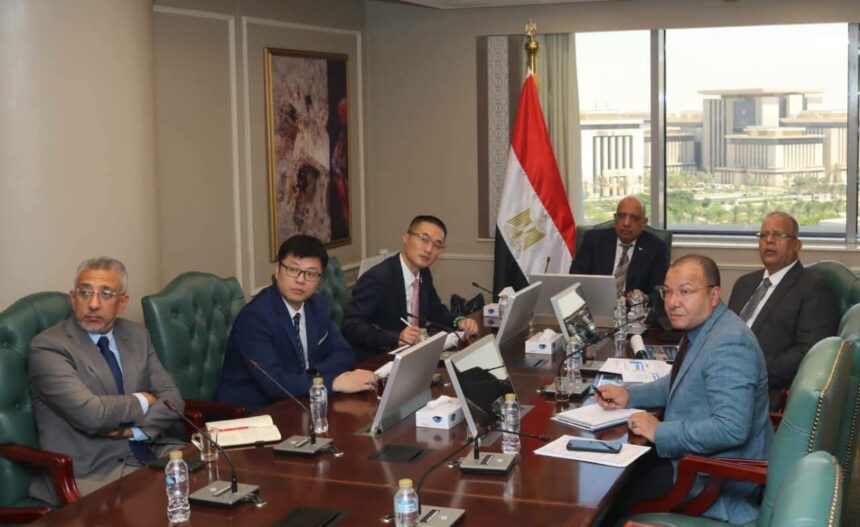
Egypt’s Minister of Electricity and Renewable Energy Mahmoud Esmat met with Huawei Egypt CEO Benjamin Houwei and senior company officials to review progress on a project to locally manufacture battery energy storage systems (BESS).
The project includes plans to establish a number of standalone BESS plants with a combined capacity of 4,000 megawatt-hours (MWh), according to a ministry statement.
The meeting focused on the latest developments related to the proposed BESS projects, including the use of Huawei’s technology to establish multiple standalone BESS plants at selected locations across Egypt’s national electricity grid.
Esmat reviewed the implementation requirements, regulatory framework and obligations related to launching the BESS manufacturing facility and the planned storage plants.
The ministry and Huawei also reviewed technical and economic feasibility studies for several potential sites across the national grid.
The projects are intended to support grid stability and flexibility, particularly during peak demand periods, while maximizing the utilization of electricity generated from renewable energy sources.
“BESS projects are one of the pillars of grid stability and flexibility and ensuring the quality of electricity supply,” Esmat said, stressing the importance of expanding storage systems connected to solar and wind projects, as well as establishing standalone facilities at selected points across the national grid.
He added that energy storage has become increasingly important as Egypt moves towards greater reliance on renewable energy and seeks to reduce its dependence on conventional fuels.
The Minister also highlighted Huawei’s role as a strategic partner in Egypt’s digital transformation efforts, including smart solutions, data centres, and the modernization and development of communication systems supporting the national electricity grid.
The meeting also addressed Egypt’s plans to transition from a conventional electricity network to a smart grid, with a focus on adopting advanced technologies to improve operational efficiency, electricity supply quality and overall network performance.
The Ministry said BESS would help maximize the benefits of renewable energy by enabling generated electricity to be stored and used when needed, particularly during periods of peak demand, thereby supporting the stability and efficiency of the unified electricity grid.