Egypt will increase university admissions in artificial intelligence, data science, technology, engineering and other high-demand fields while reducing intake in humanities disciplines with weaker labour-market demand.
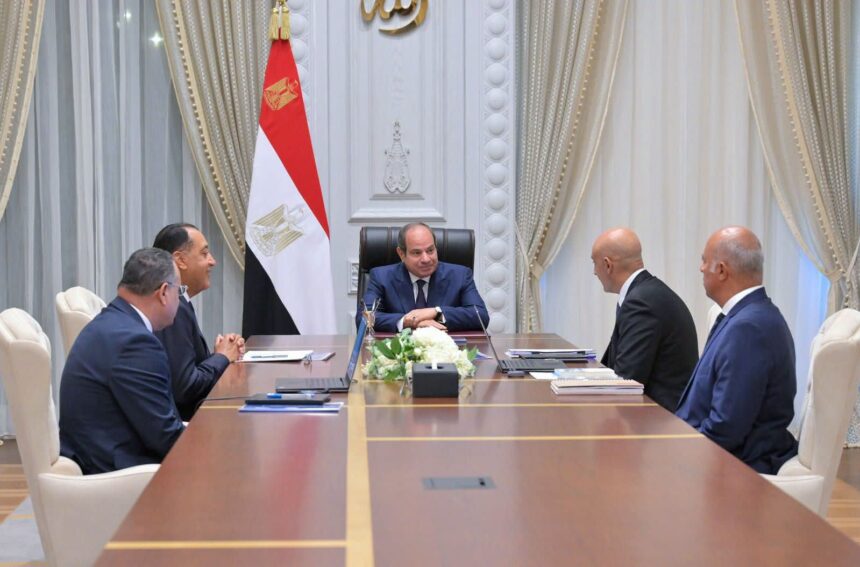
President Abdel Fattah Al-Sisi met on Tuesday with Prime Minister Mostafa Madbouly, Education and Technical Education Minister Mohamed Abdel Latif, and Higher Education and Scientific Research Minister Abdel Aziz Konsowa in New Alamein to review preparations for the new academic year and reforms across Egypt’s education system.
Presidential Spokesperson Mohamed El-Shennawy said student allocations for the coming academic year had been adjusted to increase enrolment at technological universities and faculties specialising in computer science, information technology, artificial intelligence, data science, science and engineering.
Admissions are also being expanded in medical and nursing programmes, industrial education, agriculture, tourism and hospitality, while intake is being reduced in humanities disciplines where domestic and international labour-market demand is lower.
The meeting also reviewed progress on the Future Skills Academy, which aims to provide students, graduates, faculty members and higher-education staff with advanced digital training and internationally recognised professional qualifications.
Egypt’s Higher Education Ministry is preparing a cooperation agreement with the United Nations Development Programme to provide training content from leading international universities, institutions and companies in fields including artificial intelligence, data analytics, cybersecurity, cloud computing, entrepreneurship and green skills.
The first phase is expected to provide around 50,000 training licences benefiting approximately 150,000 students and trainees, with the programme gradually expanding to about 1.5 million licences over three years.
Al-Sisi also reviewed preparations for the new school year and developments in the Egyptian Baccalaureate and Thanaweya Amma systems. The Education Ministry said new curricula had been developed according to international standards with input from specialised institutions.
Officials also reviewed education partnerships with Japan, particularly through Egyptian-Japanese schools, as well as cooperation with Germany in technical and vocational education and with Italy in applied technology schools.
The Education Ministry has also arranged a trip to Japan for 10 students from different governorates in recognition of their achievements in programming, alongside 50 company-based training opportunities designed to give students practical experience.
Al-Sisi directed the government to continue updating curricula and textbooks, expand digitalisation and the use of artificial intelligence in education, and strengthen partnerships with international universities and educational institutions, including efforts to establish foreign university branches in Egypt.