Egypt intensified its diplomatic efforts on Sunday to contain regional tensions and prevent a wider conflict after US President Donald Trump said he had suspended a planned strike on Iran following preliminary understandings that could include reopening the Strait of Hormuz and addressing Tehran’s nuclear programme.
Egypt’s Ministry of Foreign Affairs said Foreign Minister Badr Abdelatty discussed regional developments and de-escalation efforts with US Special Envoy Steve Witkoff, with particular focus on Iran and the implications of the crisis for regional security.
Abdelatty stressed the need to prevent tensions from escalating further, affirming that political and diplomatic solutions remain the only path to restoring security and stability. He also called for intensified international and regional efforts to revive dialogue and address the underlying causes of the crisis.
The Egyptian foreign minister also held a separate phone call with Kuwaiti Foreign Minister Sheikh Jarrah Jaber Al-Ahmad Al-Sabah to discuss the latest regional developments, maritime security, and freedom of navigation.
Egypt’s diplomatic outreach formed part of a broader round of regional contacts involving Saudi Arabia, Qatar, Kuwait, Jordan, and Bahrain as Arab states sought to encourage Washington and Tehran to return to negotiations.
According to the Saudi Press Agency, Saudi Crown Prince Mohammed bin Salman spoke with Trump and urged all parties to prioritise dialogue and avoid sliding into a broader regional conflict.
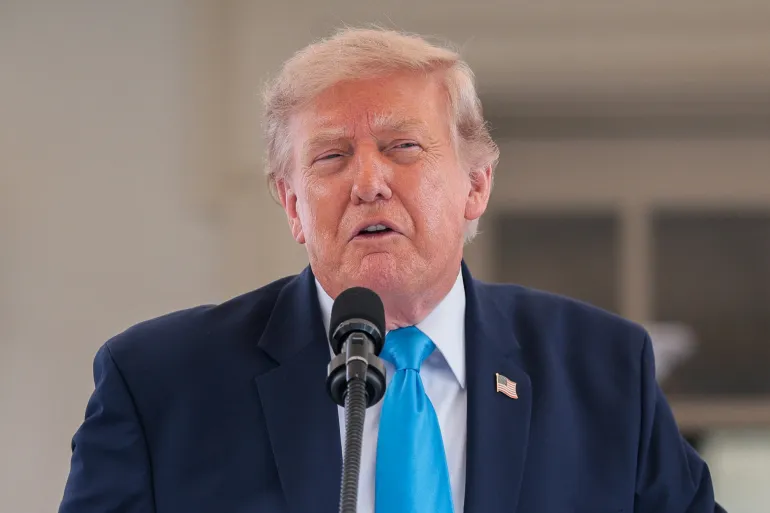
Trump later announced that he had called off a planned strike on Iran at the request of Tehran and several regional countries after agreement had been reached on the broad outlines of a possible deal.
In a post on Truth Social, Trump said the proposed arrangement would include the immediate and full reopening of the Strait of Hormuz and an end to what he described as the Iranian nuclear threat. He added that the United States and Israel had agreed to suspend the planned attack but warned that Washington remained prepared to use overwhelming military force if an agreement was not finalised promptly.
Israel’s Channel 12, citing diplomats familiar with the negotiations, reported that Iranian Foreign Minister Abbas Araghchi had accepted a US-Qatari proposal outlining arrangements to reopen the Strait of Hormuz. The report said his approval was a key factor behind Trump’s decision to cancel the strike.
Iranian media, however, presented a conflicting account. Fars News Agency quoted a source close to the Iranian negotiating team as denying that any agreement had been reached. A military source also said the strait would remain closed as long as what it described as hostile US actions continued, adding that vessels would only be permitted to transit through a designated corridor with approval from the Islamic Revolutionary Guard Corps Navy.
Qatari Prime Minister and Foreign Minister Sheikh Mohammed bin Abdulrahman Al Thani told his Kuwaiti and Jordanian counterparts that all parties must honour the US-Iran memorandum of understanding, including commitments to guarantee freedom of navigation through the Strait of Hormuz.
Meanwhile, the United States continued its naval operations in the region. US Central Command (CENTCOM) said an F-35C stealth fighter launched from the aircraft carrier USS Abraham Lincoln in the Arabian Sea in support of ongoing operations enforcing the maritime blockade on Iran.
CENTCOM added that, by 2 August, US forces had rerouted 35 commercial vessels, disabled two ships, and inspected two others as part of the operation.
Iran’s military also indicated that it had used the ceasefire period to rebuild its capabilities. A military spokesperson said Tehran had imported new military equipment, repaired damaged systems, and manufactured additional drones during the lull in fighting.